



Nicotine-free on the packaging is not a verified statement, it's a claim made by the seller. On March 30, 2026, AT Schweiz found products at a major Swiss online retailer that were labeled nicotine-free and contained between 10 and 66 milligrams of nicotine per pouch. You have to check for yourself.
In short
- Nicotine-free is not a protected term with a seal of approval, it's a manufacturer's statement.
- On 30.03.2026, AT Schweiz reported products with up to 66 mg of nicotine that were being sold as nicotine-free.
- The Tobacco Products Act prohibits misleading statements in Article 18, and on top of that there is the Act against Unfair Competition.
- There are nicotine analogs such as 6-methylnicotine whose legal status in Switzerland is unclear.
- Three checks help: look for the milligram figure, read the ingredients list, check the seller and origin.
The case that made the problem visible
On March 30, 2026, the Swiss Association for Tobacco Control (Arbeitsgemeinschaft Tabakprävention Schweiz) checked the range of nicotine pouches at a major Swiss online retailer.
The result: numerous product pages described the same product as nicotine-free snus while also listing a nicotine content. The values ranged from 10 to 66 milligrams per pouch.
For context: around 45 milligrams is already considered a very high value. The organization reported the cases to the Federal Office of Public Health (FOPH) and the State Secretariat for Economic Affairs.
This was not an isolated mistake. AT Schweiz described the pattern as a structural problem.
Why the label alone proves nothing
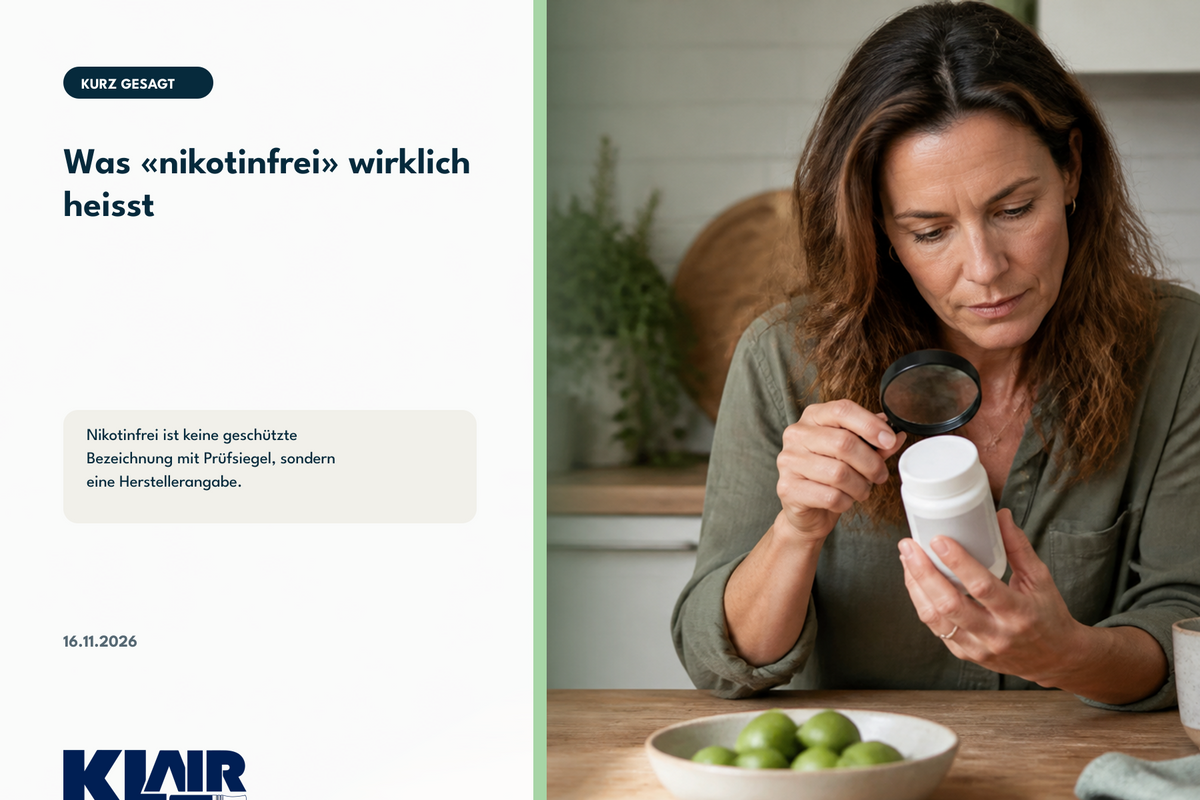
Nicotine-free is not a protected term with a testing body, lab proof and a seal. It's a statement the seller makes themselves.
Checks happen after the fact and by random sampling. By the time a false statement is noticed, the product is already on the shelf or in the online shop.
Then there's online retail. A marketplace shows product pages from third-party sellers, and their statements end up in the shop unchecked.
So the label is a clue. It is not proof.
What Swiss law says about it
Two laws apply, and both are clear.
The Tobacco Products Act has been in force since October 1, 2024. In Article 18, it prohibits statements that mislead about a product's properties, composition or effects. Article 25 allows a product to be withdrawn from the market or its product information to be corrected.
On top of that, there is the Federal Act against Unfair Competition. AT Schweiz explicitly based its report on Article 2 and Article 3 paragraph 1 letter b UWG, i.e. the provision on incorrect and misleading statements.
So the rules exist. The problem lies in enforcement, not in the text of the law.
The second case: nicotine-free, but not free of effects
There is a variant where the statement is formally correct and still misleading.
6-methylnicotine, or 6-MN for short, is a synthetically produced nicotine analog. It mimics the effects of nicotine or even amplifies them. It is marketed under names like Metatine or NoNic.
On March 14, 2025, AT Schweiz called in a press release for an immediate sales ban on all products containing 6-MN. The reason: early indications of a higher addiction potential than conventional nicotine.
The legal status is open. According to AT Schweiz, whether 6-MN falls under the Tobacco Products Act is unclear.
This means a product can be correctly declared as nicotine-free and still contain a nicotine-like substance. That is the most unpleasant gap in the whole topic.
Three checks before you buy
Together, these three steps take two minutes and cover the most common cases.
- Look for the milligram figure, not the headline. If there is a nicotine figure above zero anywhere on the page or the pack, it contains nicotine. The product title doesn't count.
- Read the whole ingredients list. Watch for names you don't know and for marketing names like NoNic or Metatine. Where there is no complete list, there is no basis for a decision.
- Check the seller and origin. Who is the seller, is there an address in Switzerland, and can you find the same statement on the manufacturer's website? On marketplaces, the seller is often not the shop operator.
A fourth point belongs here too, even if it's uncomfortable. If a product is suspiciously cheap and the seller can't be pinned down, that's a reason to leave it.
What this means for people who want to get off nicotine
For quitting smoking, this question is not academic. If you consume nicotine without noticing, you are not quitting, you are switching sources.
This especially affects the last step. If you have reduced the nicotine level in your liquid all the way to zero and then reach for a mislabeled product, you start over.
And it affects people who have never smoked. For them, a product sold as nicotine-free with 66 milligrams of nicotine is the way into a dependency they never went looking for.
That's why this article is on the blog. It doesn't sell anything.
Where we stand
We make a product that contains no nicotine, so we are biased on this question. That's why we keep it short and verifiable.
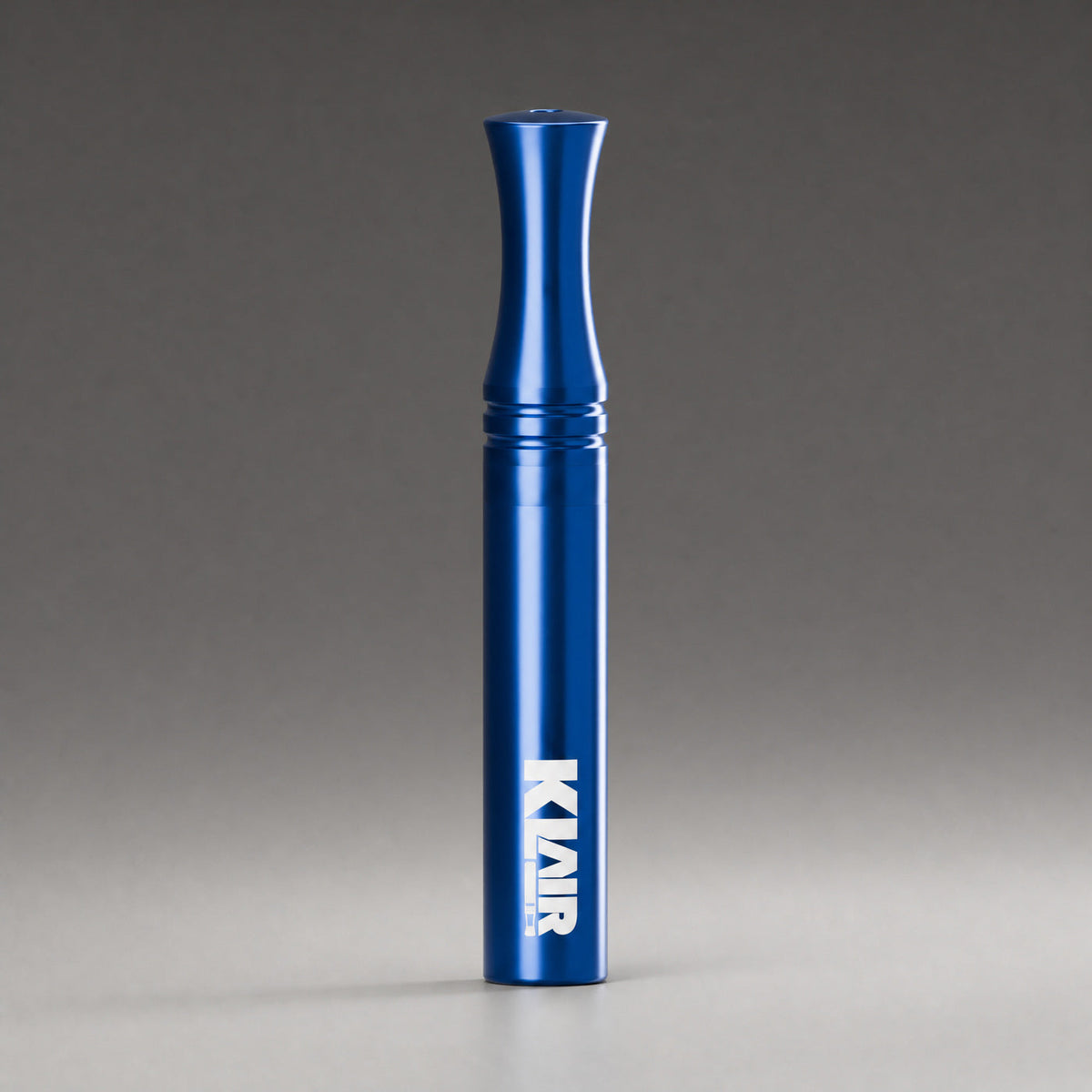
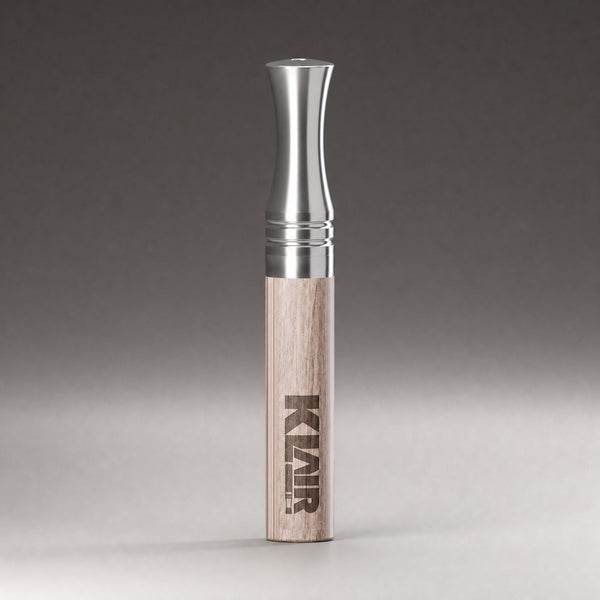
KLAIR contains no nicotine and no tobacco. That is a statement that can be measured, and we make it without any qualifiers.
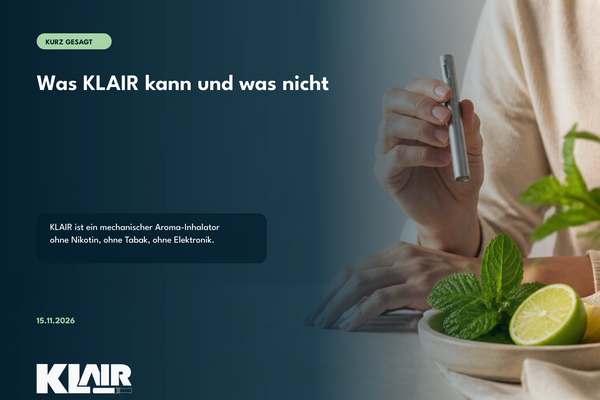
What the product otherwise is, and what it explicitly is not, is covered in a separate article, including the points where we lack data.
What KLAIR can and can't do is the complete overview on this.
The key points in brief
Nicotine-free is a manufacturer's statement, not a seal of approval. The case from March 30, 2026, with values of up to 66 milligrams, shows how far apart the label and the contents can be.
The law is on your side. Article 18 of the Tobacco Products Act prohibits misleading statements, and so does the UWG. Enforcement still lags behind.
So check for yourself: look for the milligram figure, read the whole ingredients list, trace the seller and origin. And be aware that there are substances that act like nicotine and are not yet covered by law.
Sources
- AT Schweiz: Nicotine pouches presented as "nicotine-free". Report to the FOPH and SECO, check of 30.03.2026, values between 10 and 66 mg per pouch, based on Art. 2 and Art. 3 para. 1 let. b UWG and Art. 18, 25 and 28 TabPG. at-schweiz.ch (accessed August 24, 2026)
- AT Schweiz: 6-methylnicotine, Switzerland must not fail at protecting young people again. Press release of 14.03.2025. at-schweiz.ch (accessed August 24, 2026)
- AT Schweiz: Disposable e-cigarettes with 6-methylnicotine. at-schweiz.ch (accessed August 24, 2026)
- AT Schweiz: Swiss Tobacco Products Act (TabPG). at-schweiz.ch (accessed August 24, 2026)
- Federal Office of Public Health (FOPH): FAQ on implementing the Tobacco Products Act. bag.admin.ch (accessed August 24, 2026)
- Federal Office of Public Health (FOPH): Tobacco Products Act. bag.admin.ch (accessed August 24, 2026)
- Fedlex: Federal Act against Unfair Competition (UWG). fedlex.admin.ch (accessed August 24, 2026)
- Cool and Clean: 6-methylnicotine. coolandclean.ch (accessed August 24, 2026)
- stopsmoking.ch: Vaping and withdrawal, the 12 rules for quitting nicotine. stopsmoking.ch (accessed August 24, 2026)
- Infodrog, Swiss Coordination and Expertise Center for Addiction: Tobacco policy. infodrog.ch (accessed August 24, 2026)

Leave a comment
All comments are moderated before being published.
This site is protected by hCaptcha and the hCaptcha Privacy Policy and Terms of Service apply.