




 Everyday life and triggers

KLAIR® Smoke-free blog
Quitting is a moment. Staying smoke-free is everyday life.
What happens in the first 72 hours, why day three is the hardest and what to do with your hands after a meal, with coffee or in the car.
Picked for you by us
Everyday life and triggers


Latest articles
-
 Everyday life and triggersWhy we don't make health claimsUnder Article 4 of the Therapeutic Products Act, merely promoting a product as such is enough to make it a medicine. What that means for our writin...
-
 Everyday life and triggersWhat "nicotine-free" really meansNicotine-free on the label is no guarantee. What the term means legally in Switzerland, where it gets misused and how you can check a product yours...
-
 Everyday life and triggersWhat KLAIR can and can't doAn honest assessment: what KLAIR is technically, what it explicitly isn't and who it's probably not the right choice for.
-
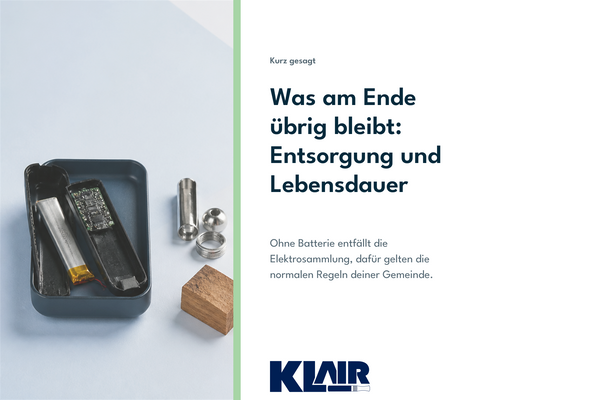 Everyday life and triggersWhat's left at the end: disposal and lifespanIn Switzerland, 19 percent of disposable vapes are collected. What's left of a device without a battery, how long a capsule lasts and where the par...
-
 Everyday life and triggersOn the go: case, plane, open-plan officeNo battery means no lithium rules on the plane. What that means for carry-on bags, the office and public transport, and where house rules still hav...
Our most popular articles
-
 Everyday life and triggersIQOS without nicotine? What exists and what KLAIR does differently796 starting points
-
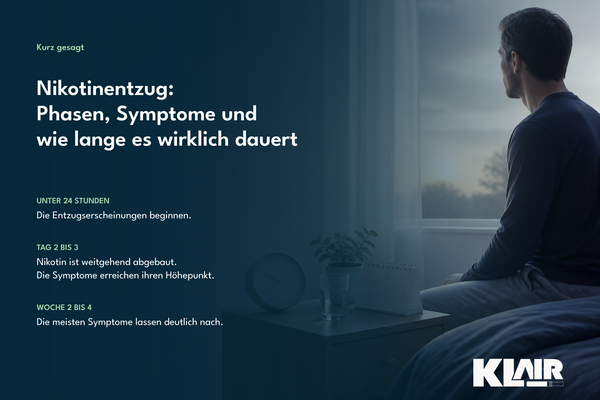 Everyday life and triggersNicotine withdrawal: stages, symptoms and how long it really lasts383 starting points
-
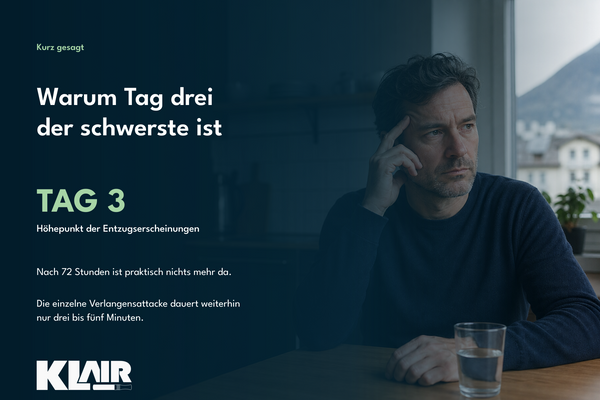 Everyday life and triggersWhy day three is the hardest131 starting points
-
 Everyday life and triggersMakya and KLAIR compared129 starting points
-
 Everyday life and triggersGlo without nicotine? What's out there and what KLAIR does differently101 starting points
-
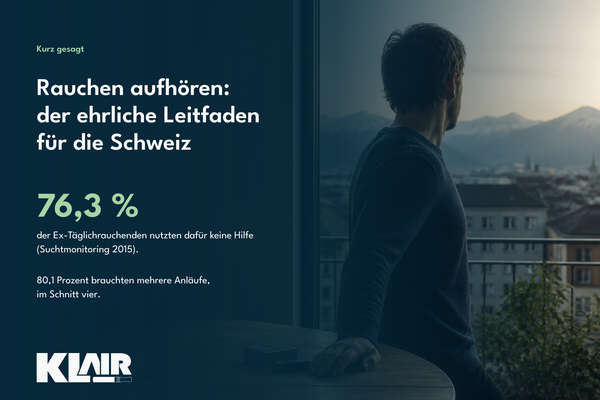 Everyday life and triggersQuitting smoking: the honest guide for Switzerland53 starting points
Subpages and categories
All categories of the smoke-free blog at a glance, plus About us, Contact and FAQ. Pick the topic that fits you right now.
Ritual, hand and mouthHand, mouth and break: what part of smoking is habit and what you can do about it.Coming soon
Everyday life and triggersCoffee, car, bar, office: the situations where it's hardest.53 articles
Alternatives comparedMethods and products side by side, with sources and no sugarcoating.Coming soon
Withdrawal and cravingsThe first days, cravings and relapses: what happens and what you can do.Coming soon
Understanding quittingHow quitting smoking works: methods, preparation and an honest overview.Coming soon
Your body afterwardsWhat happens to sleep, taste, lungs and weight after you quit, with sources.Coming soon
Flavors and useFlavors, capsules, care and use, simply explained.Coming soon
Honestly speakingFacts without sugarcoating, with sources and dates.Coming soon
Vaping, snus, nicotine productsVaping, snus and other nicotine products compared by the facts.Coming soon
Real storiesExperiences of real people, only with their consent.Coming soon
Switzerland in detailFacts and figures on tobacco and nicotine in Switzerland.Coming soon











All articles
 Everyday life and triggers
Why we don't make health claims
Under Article 4 of the Therapeutic Products Act, merely promoting a product as such is enough to make it a medicine. What that means for our writing and what it costs us.
 Everyday life and triggers
What "nicotine-free" really means
Nicotine-free on the label is no guarantee. What the term means legally in Switzerland, where it gets misused and how you can check a product yourself.
 Everyday life and triggers
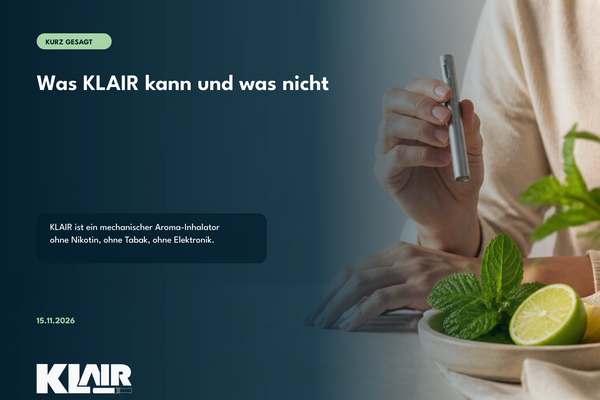
What KLAIR can and can't do
An honest assessment: what KLAIR is technically, what it explicitly isn't and who it's probably not the right choice for.
 Everyday life and triggers
What's left at the end: disposal and lifespan
In Switzerland, 19 percent of disposable vapes are collected. What's left of a device without a battery, how long a capsule lasts and where the parts belong.
 Everyday life and triggers
On the go: case, plane, open-plan office
No battery means no lithium rules on the plane. What that means for carry-on bags, the office and public transport, and where house rules still have the final say.
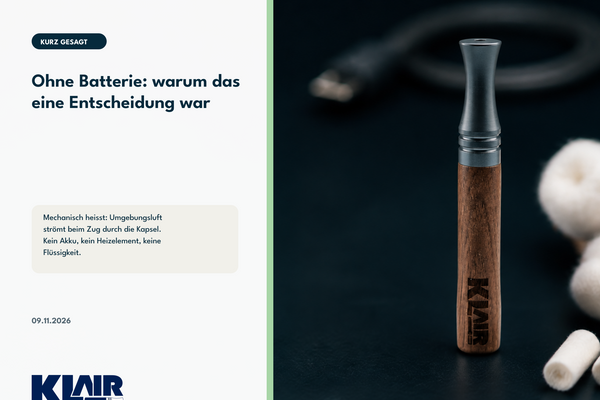 Everyday life and triggers
No battery: why that was a decision
No battery, because a battery adds nothing to what the pen does. What mechanical means, what it means in everyday life (charging, flying, disposal) and what the decision costs.
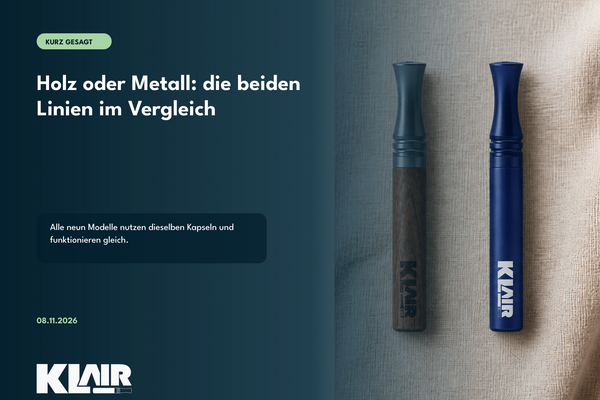 Everyday life and triggers
Wood or metal: the two lines compared
Nine models, two designs, one inner workings. Feel, aging, care and price of the wood-metal line and the metal line, plus three questions that help you decide.
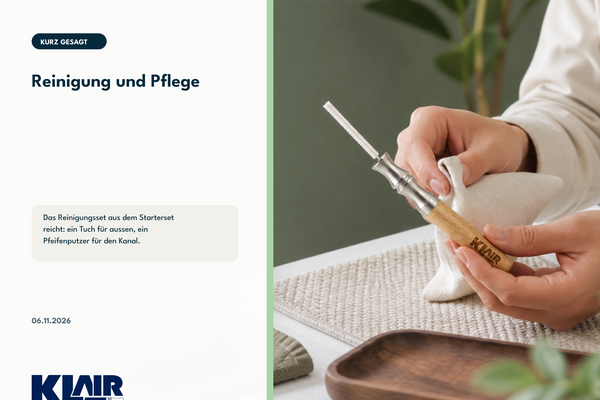 Everyday life and triggers
Cleaning and care
Pipe cleaner through the channel with every capsule change, cloth over the housing once a week. What the pen needs, what harms it and how to spot a care mistake.
 Everyday life and triggers
Changing the capsule, step by step
Open, remove, insert, close. The change takes half a minute. How to tell when a capsule is used up and what to do with the old one.
 Everyday life and triggers
How to draw right: the difference from inhaling into the lungs
The most common mistake is drawing too hard and too deep out of cigarette habit. The sequence of movements step by step, and why slow and shallow works better.
 Everyday life and triggers
Your first ten minutes with KLAIR
Unpack, insert the capsule, first draw. What's normal in the first ten minutes, what isn't, and which beginner's mistake happens most often.
 Everyday life and triggers
When everyone around you smokes
If your spouse quits, your own chance of smoking drops by 67 percent. What the people around you change, what you need to say and what support has been shown not to do.
 Everyday life and triggers
On the Road: Airport, Train, Hotel
Swiss trains have been smoke-free since 2005, and since 2019 so have platforms outside marked zones. Why traveling is the hardest and the best time to quit.
 Everyday life and triggers
Parties, Bars, Alcohol: The Toughest Situation
A night at the bar is the hardest test after quitting smoking. Why that is, what the research has to say about it, and a strategy for the evening.
 Everyday life and triggers
Smoking in the car: the trigger in an enclosed space
About 10 percent of smokers name driving as a trigger. Why the habit is especially stubborn in the car and how to redesign your drive.
 Everyday life and triggers
Stress and deadlines at the office
According to Parrott, a cigarette's relaxing effect is mostly the end of withdrawal. How to keep the break in your workday without the nicotine.
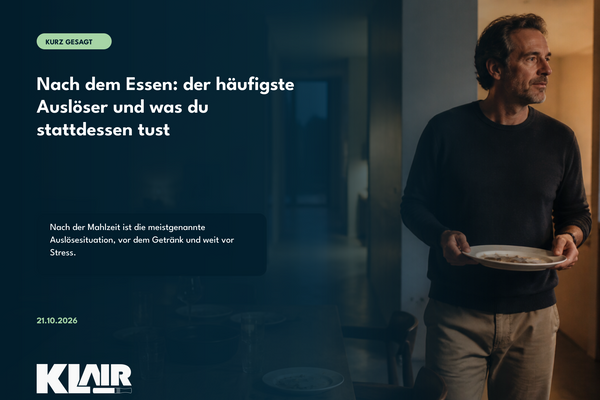 Everyday life and triggers
After meals: the most common trigger and what to do instead
After a meal is the situation most often named for cravings. Why this moment of all moments, what counseling services advise and how to rebuild the transition.
 Everyday life and triggers
The coffee break: why coffee hits differently after quitting
Three weeks after quitting, caffeine levels in one study were at 203 percent of baseline. Why that happens and why you can still keep your coffee.
 Everyday life and triggers
The first cigarette in the morning
How soon after waking up you smoke says more about dependence than any other single question. What that means and how to redesign your morning.
 Everyday life and triggers
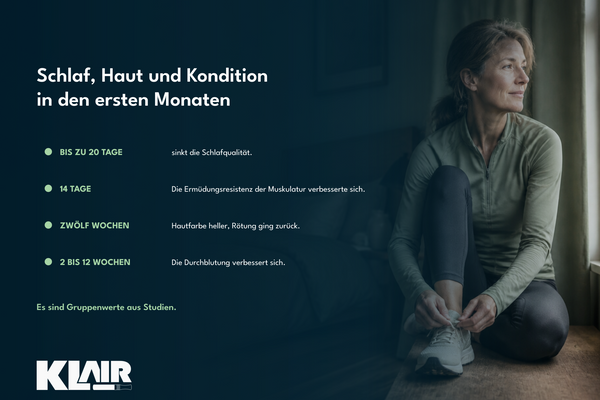
Sleep, Skin and Fitness in the First Few Months
Sleep gets worse first, for up to 20 days. Skin and fitness take weeks. What measurably happens in the first six months, with sources and timeframes.
 Everyday life and triggers
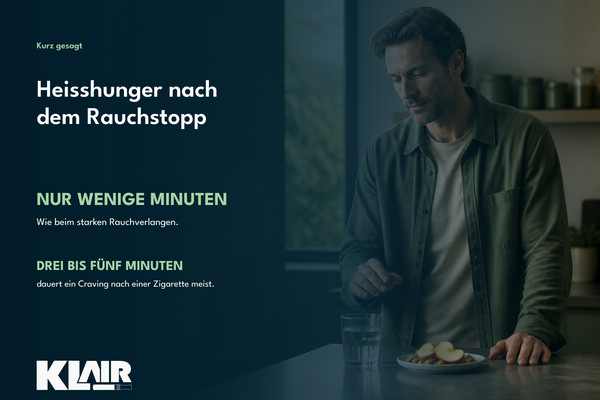
Food cravings after quitting smoking
Real hunger, nicotine craving or a substitute action: the three feel similar. How to tell them apart and what helps in the minutes that matter.
 Everyday life and triggers
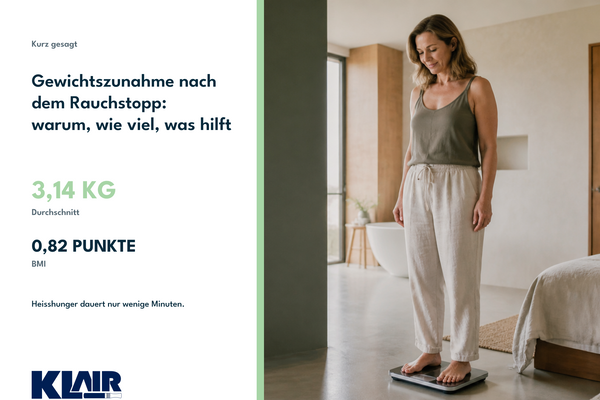
Weight gain after quitting smoking: why, how much, what helps
Ex-smokers gain an average of 3.14 kg. Where that comes from, why the number is smaller than feared and what actually helps, without diet talk.
 Everyday life and triggers
Taste and smell come back
It starts after 48 hours, and after 45 days it's measurable. What happens to taste and smell after quitting smoking, and why some people find it unpleasant at first.
 Everyday life and triggers
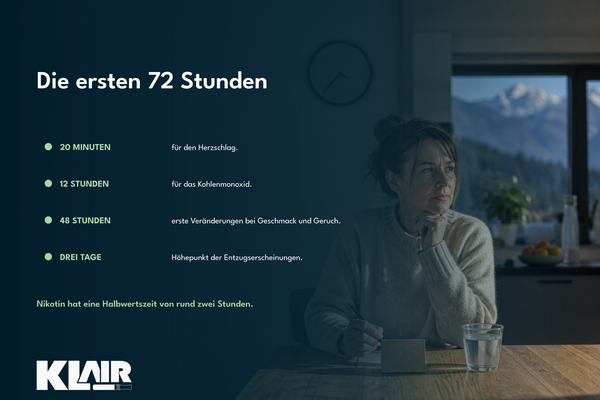
The first 72 hours
What measurably happens in the first three days after your last cigarette, hour by hour, and why the symptoms are strongest in exactly this window.
 Everyday life and triggers
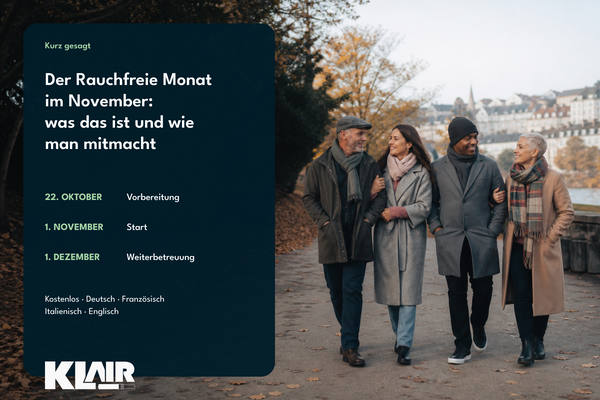
The Smoke-Free Month in November: what it is and how to join
The national campaign starts on November 1, the preparation on October 22. How it works, how to sign up, who runs it and what the research says.
 Everyday life and triggers
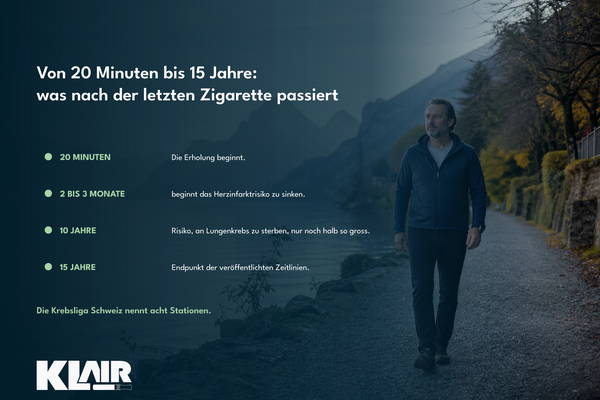
From 20 Minutes to 15 Years: What Happens After Your Last Cigarette
The complete timeline after quitting smoking, backed by the Swiss Cancer League and the NHS. What happens after 20 minutes, 12 hours, one year and 15 years.
 Everyday life and triggers
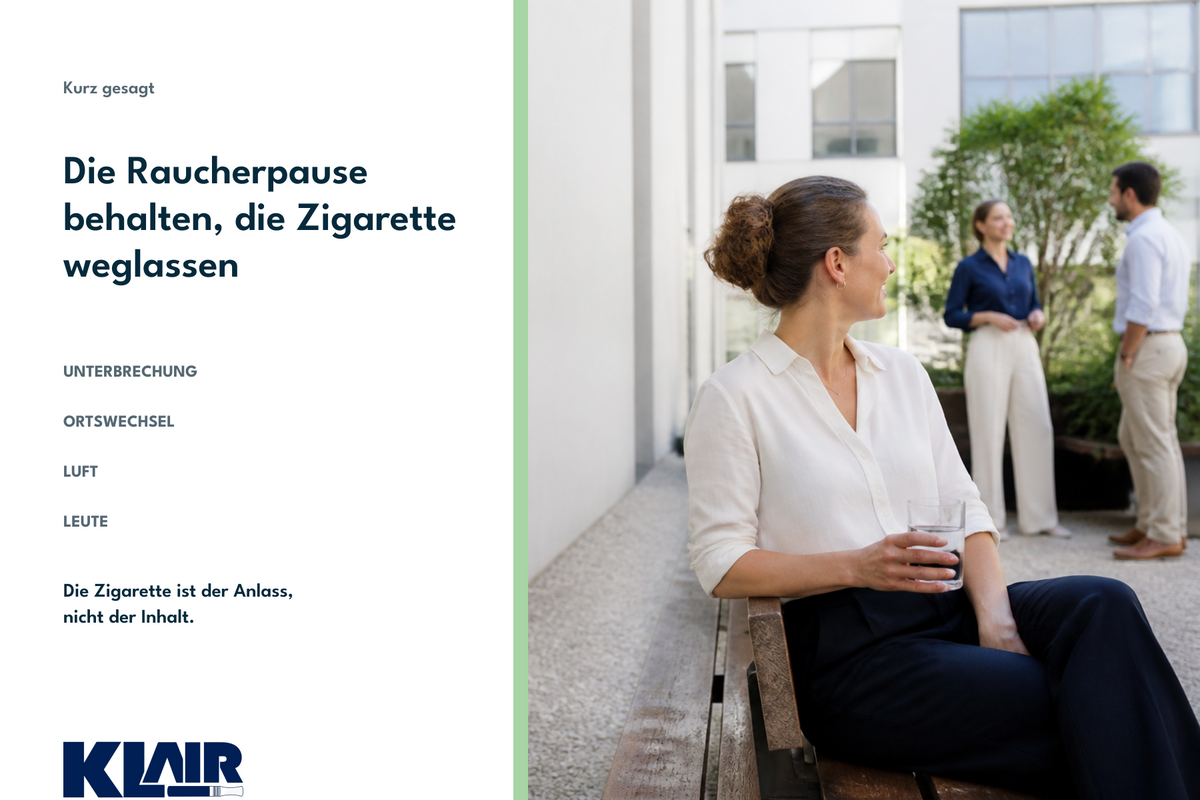
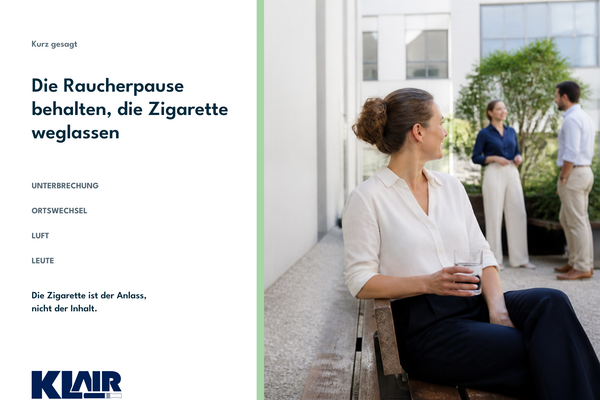
Keep the smoke break, drop the cigarette
The break outside is rarely valuable because of the nicotine. How to keep the interruption, the fresh air and the people, and only swap out what's inside.
 Everyday life and triggers
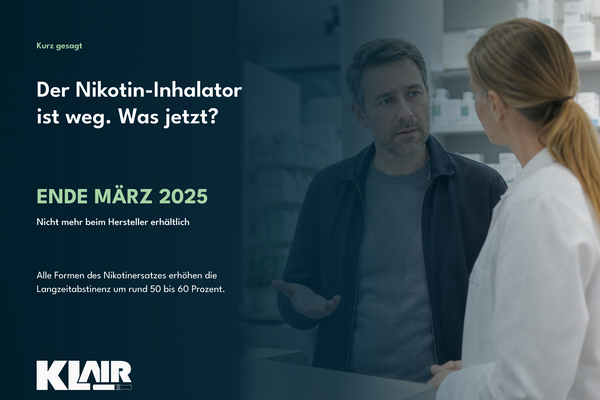
The nicotine inhaler is gone. Now what?
Since the end of March 2025, the Nicorette Inhaler has no longer been available from the manufacturer. What the product did, what the gap means and what's left.
 Everyday life and triggers
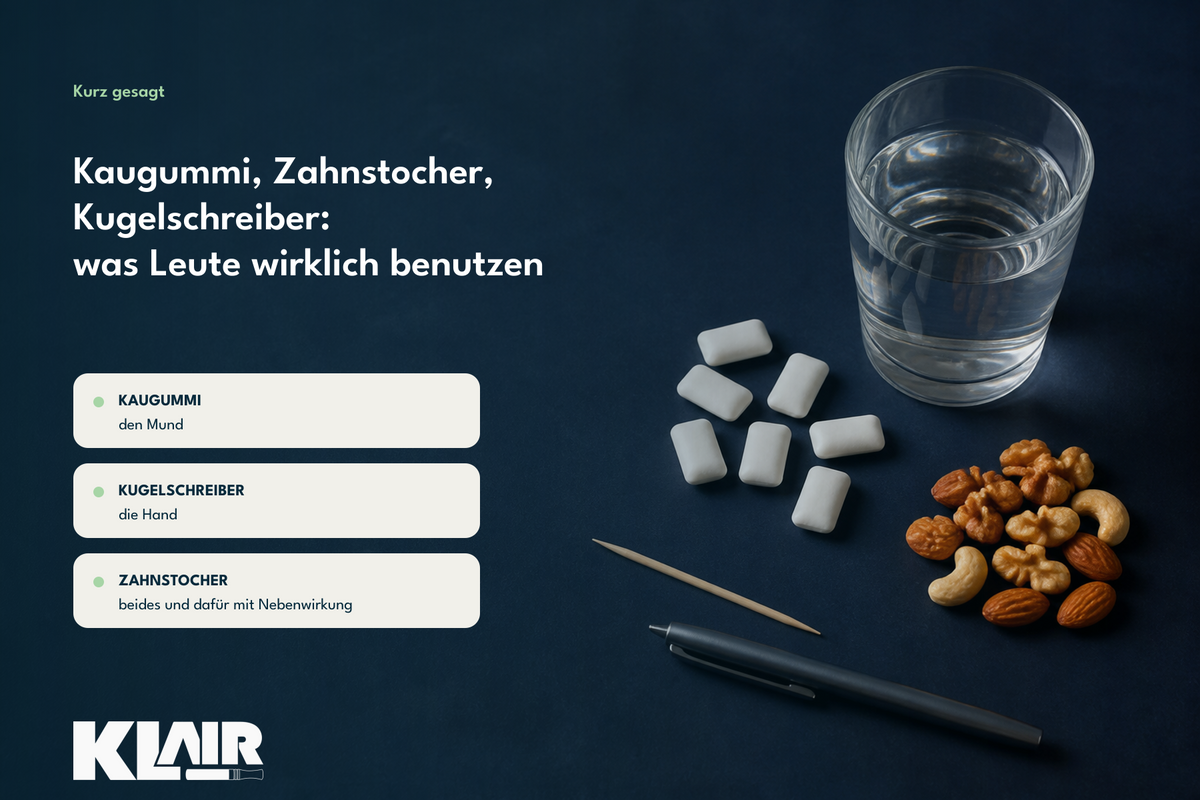
Gum, toothpicks, pens: what people actually use
Your hand goes to your mouth around 200 times a day. An honest look at the usual makeshift solutions, including what doesn't work about them.
 Everyday life and triggers
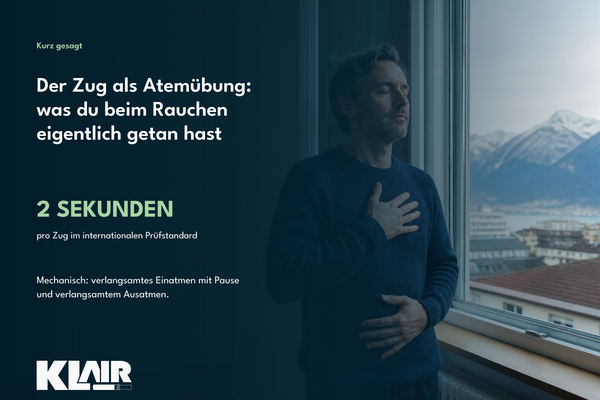
The draw as a breathing exercise: what you were really doing when you smoked
A draw lasts around two seconds and, mechanically, is a slowed-down inhale with a pause. What that has to do with breathing exercises and what follows from it.
 Everyday life and triggers
Oral fixation, explained without the jargon
Why you need something in your mouth after quitting. Where the term comes from, what's actually proven and why many people reach for snacks instead.
 Everyday life and triggers
Why your hand needs something to do
Lighting, holding, twirling, tapping: for many, smoking was also something for the hand to do. What research on fidgeting shows and what it doesn't.
 Everyday life and triggers
Your Lungs After Quitting Smoking: What Recovers and What Stays
After one to nine months, smoker's cough goes down and lung function goes up. Lost lung tissue doesn't come back. An honest look at the evidence.
 Everyday life and triggers
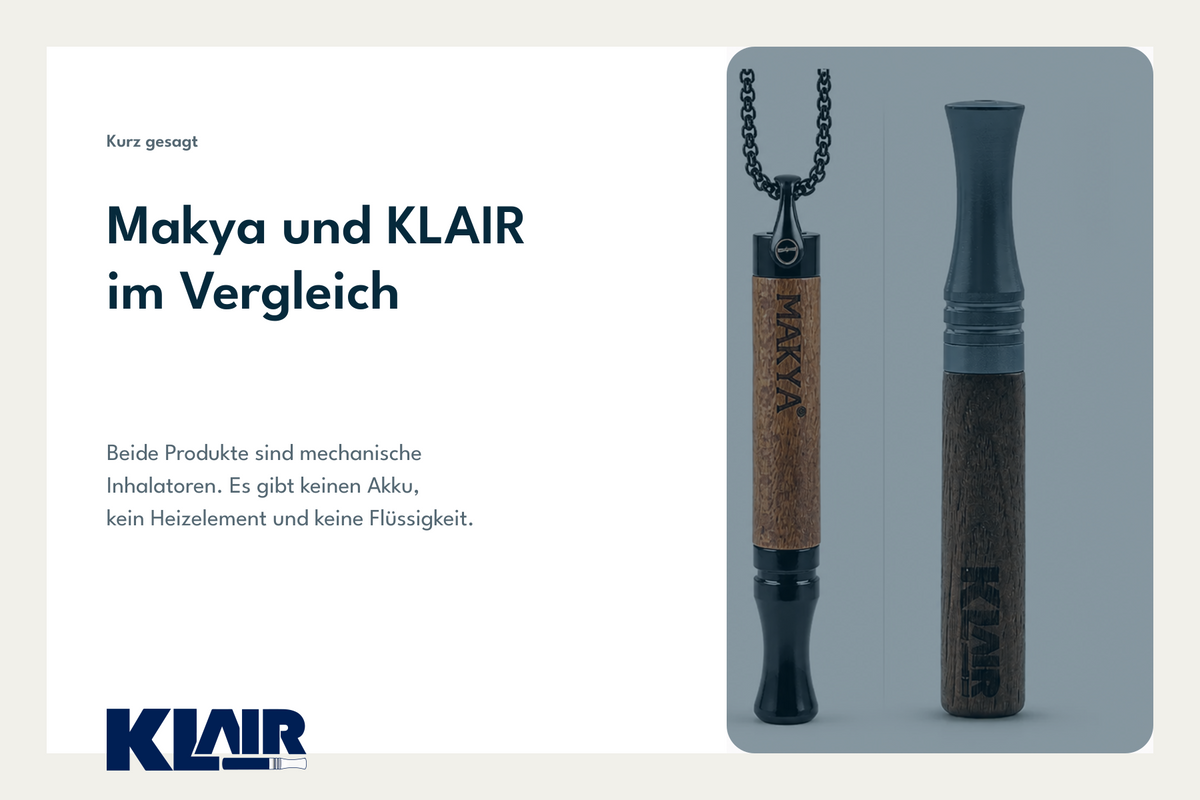
Makya and KLAIR compared
Two nicotine-free inhalers compared on the facts: design, what's included, prices, refills and availability in Switzerland. No rating of the other product.
 Everyday life and triggers
Two hundred times a day: why the hand-to-mouth gesture runs so deep
If you smoke a pack a day, you bring your hand to your mouth about 200 times. What this repetition does to a habit, and why it stays when the nicotine is gone.
 Everyday life and triggers
Why the craving still comes after a year
About half of ex-smokers still have regular cravings after a year. Why conditioned craving follows different rules than nicotine withdrawal.
 Everyday life and triggers
Your emergency plan for the tough minutes
Five steps against acute cigarette cravings, in order. To save or print. A wave lasts three to five minutes, and that's how long you need to bridge.
 Everyday life and triggers
Irritable, restless, wide awake: the withdrawal symptoms nobody talks about
Constipation affects a net 17 percent of people who quit, and sleep gets worse first. The side effects of nicotine withdrawal, with duration and sources.
 Everyday life and triggers
How long nicotine stays in your body
In the blood, nicotine has a half-life of about two hours, cotinine of about 16 hours. What that means for detection times, and what it doesn't tell you about withdrawal.
 Everyday life and triggers
Why day three is the hardest
Nicotine withdrawal peaks after about three days. What happens in the 24 hours before and after, and what helps during this window.
 Everyday life and triggers
Three to five minutes: what happens in your head during a craving
A craving attack usually lasts 3 to 5 minutes and fades on its own. How the wave builds, why it falls, and what helps during those minutes.
 Everyday life and triggers
Tobacco and nicotine in Switzerland: the numbers for 2025
28.2 percent of the population aged 15 and over in Switzerland use at least one tobacco or nicotine product, 22.3 percent at least monthly. The latest FOPH figures by product, category an...
 Everyday life and triggers
Relapse: What Happens in the Days Before
A relapse rarely comes out of nowhere. What research knows about the hours before, which warning signs you can notice, and what helps then.
 Everyday life and triggers
Glo without nicotine? What's out there and what KLAIR does differently
Heated tobacco device and mechanical aroma inhaler compared on the facts: nicotine, technology, costs, legal situation and disposal. Without judging the other product.
 Everyday life and triggers
IQOS without nicotine? What exists and what KLAIR does differently
A heated tobacco device and a mechanical aroma inhaler compared on the facts: nicotine, technology, temperature, cost and disposal. Without judging the other product.
 Everyday life and triggers
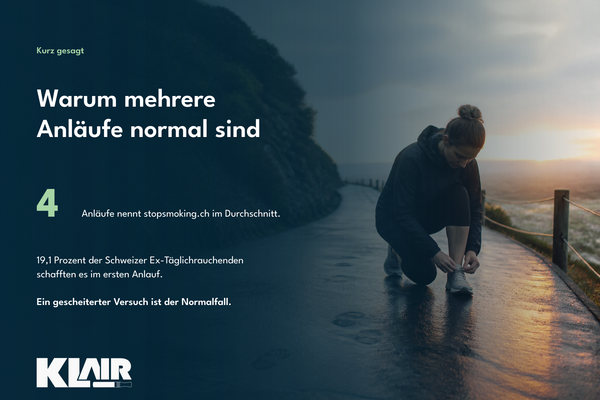
Why Multiple Attempts Are Normal
stopsmoking.ch says four attempts on average, a Canadian study around 30. What the numbers mean and what a failed attempt leaves you with.
 Everyday life and triggers
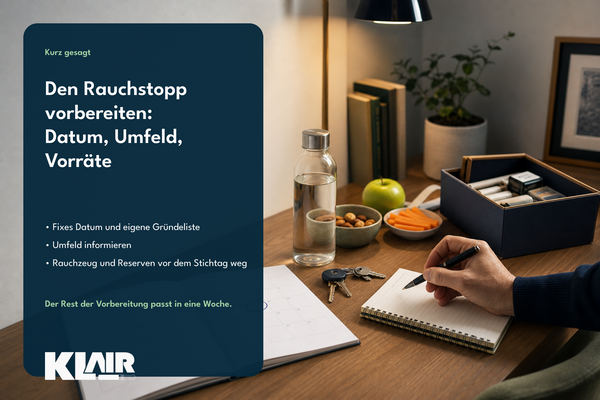
Preparing to quit: date, people, supplies
Monday is the most searched day for quitting worldwide. What to do the week before: set a date, tell the people around you, map triggers, have substitutes ready.
 Everyday life and triggers
The ways to quit smoking and what they actually do
Nicotine replacement, medication, counseling, courses, apps, hypnosis, acupuncture. Each method with what official Swiss bodies say about it, no recommendation.
 Everyday life and triggers
Quitting cold turkey or tapering off: what suits whom
A Cochrane review finds no difference, a British study with 697 participants finds an advantage for the clean break. Both approaches, compared honestly.
 Everyday life and triggers
Body, mind, hand: the three dependencies of smoking
Smoking has three dependencies: physical, psychological and behavioral. What each one involves, how long it lasts and which one gets almost nothing in counseling.
 Everyday life and triggers
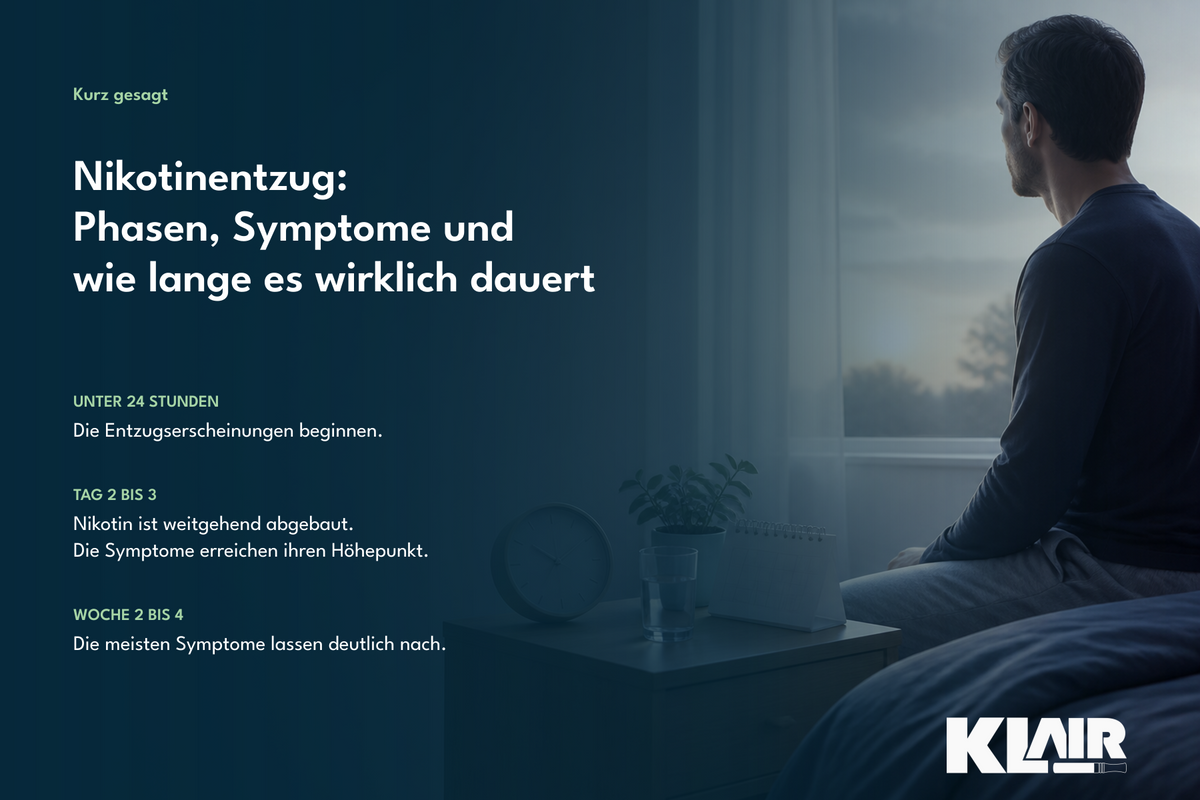
Nicotine withdrawal: stages, symptoms and how long it really lasts
Withdrawal starts within 24 hours, peaks on day three and eases off over two to four weeks. Every symptom with its duration and sources.
 Everyday life and triggers
What do I do with my hands once the cigarette is gone?
If you smoke 20 cigarettes a day, your hand goes to your mouth about 200 times. Sorted answers for hand, mouth, draw and break, honestly assessed.
 Everyday life and triggers
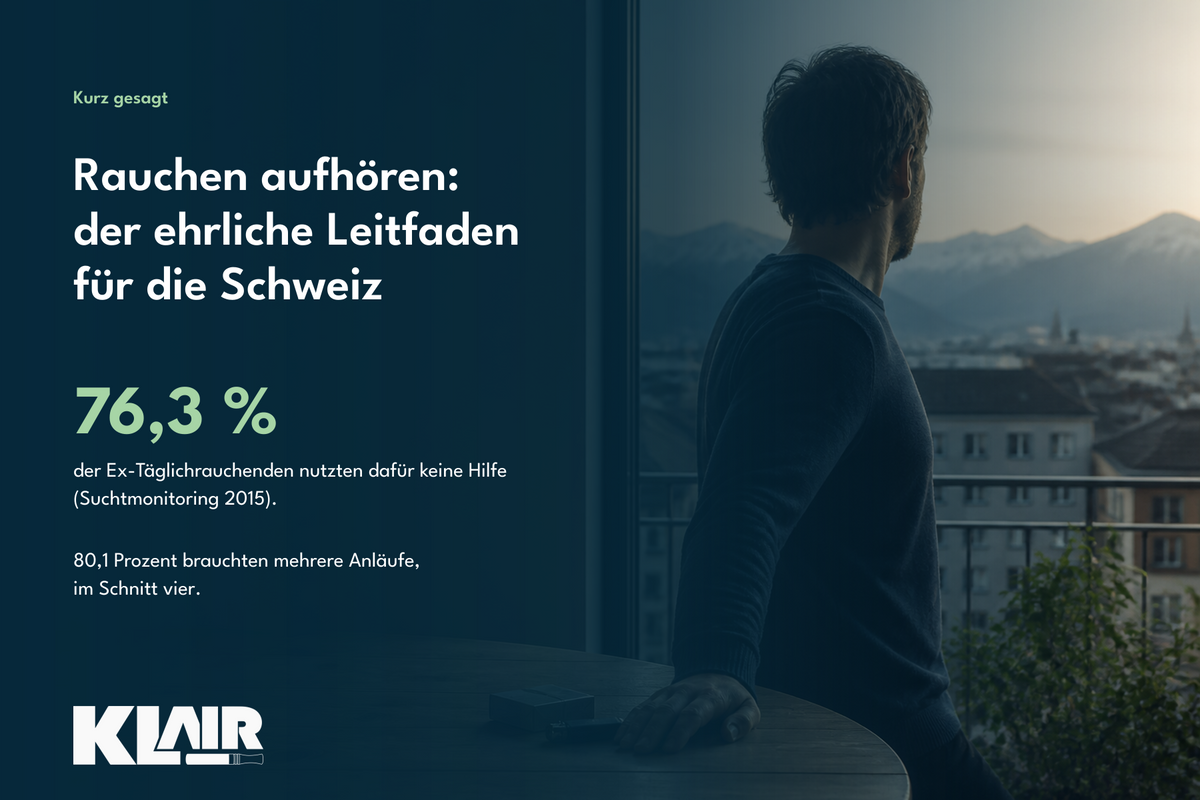
Quitting smoking: the honest guide for Switzerland
23.9 percent of people in Switzerland smoke, and 60 percent of daily smokers want to quit. Every option, figure and support service, with no sales pressure.
There are no articles for this selection yet.
The next tough minute is sure to come.
New articles from the smoke-free blog, short and without pressure.