





If you smoke a pack a day, your hand goes to your mouth around 200 times. But that's only part of the movement. In between come lighting, holding, twirling, tapping off the ash and stubbing out. For many people, it's exactly this part that's the real loss.
In short
- Deximed estimates around 200 hand-to-mouth movements per day, 73,000 a year.
- What the hand actually does goes beyond that: lighting, holding, twirling, tapping.
- In 2016, Karlesky and Isbister described such side activities as tools for embodied self-regulation.
- There's no solid evidence that fidget objects work; the research is young and small.
- stopsmoking.ch lists restlessness as a separate withdrawal symptom, distinct from craving.
What else your hand does when you smoke
The number 200 comes from a simple calculation: 20 cigarettes with around ten draws each. But it only counts the draws.
Add what happens between the draws. Taking the pack out of your pocket, flipping it open, pulling out a cigarette, looking for the lighter, lighting up, holding the cigarette between your fingers, tapping off the ash, stubbing it out.
That's a dozen small hand movements per cigarette. With 20 cigarettes, that adds up to several hundred more movements a day.
These hand movements disappear on the same day as the nicotine.
Where the number 200 comes from is covered in a separate article.
Fidgeting is a research field of its own
Michael Karlesky and Katherine Isbister studied what people hold and move in their hands on the side while at their desks.
In 2016, they described these side activities as tools for embodied self-regulation. Small, repeated movements that take little attention, carried out while you're doing something else.
Among the characteristics of such objects, they list that they're casual, playful and graspable by hand.
The pen, the key ring, the eraser. Everyone knows it, hardly anyone calls it by name.
What the research shows and what it doesn't
Caution is in order here, because the field is young.
What has been described: that people carry out such actions, when they do it and what the objects are like. That's observation and design research, not testing of effects.
What hasn't been proven: that a fidget object reduces tension, improves concentration or helps you quit smoking. Studies on this exist, but they're small and inconsistent.
So we don't claim any of that. This section is here because the need is real, not because a solution has been proven.
Why smoking was a particularly good fidget
One thing can be derived from the description of the action, without claiming an effect.
The cigarette combined several things in one object. Something in your hand, something in your mouth, a taste, a breath, a time-limited routine with a clear beginning and end.
In 1993, with twelve men who smoked, Jed Rose and his co-authors showed that the way they drew on cigarettes was guided more by the sensory experience than by the amount of nicotine. So the sensory side of smoking isn't a minor detail.
A ballpoint pen covers exactly one point of this.
Restlessness isn't the same as craving
In everyday life, this distinction is the hardest part.
stopsmoking.ch lists irritability and nervousness as a separate withdrawal symptom, distinct from craving. Deximed explicitly warns against confusing restlessness with craving.
The practical difference is big. A craving comes in waves of three to five minutes and passes again. Restlessness is a baseline state that lasts for hours.
For one, waiting helps. For the other, movement helps.
What happens during a craving is covered in detail in a separate article.
What people use instead
The usual substitutes each cover one part.
- Ballpoint pen and key ring. Only the hand, no mouth, no taste.
- Chewing gum. Only the mouth; your hand is free again after two seconds.
- Toothpick. Hand and mouth, but not meant as a long-term solution.
- Phone. Reliably keeps your hand busy and creates a second habit.
Where KLAIR fits in
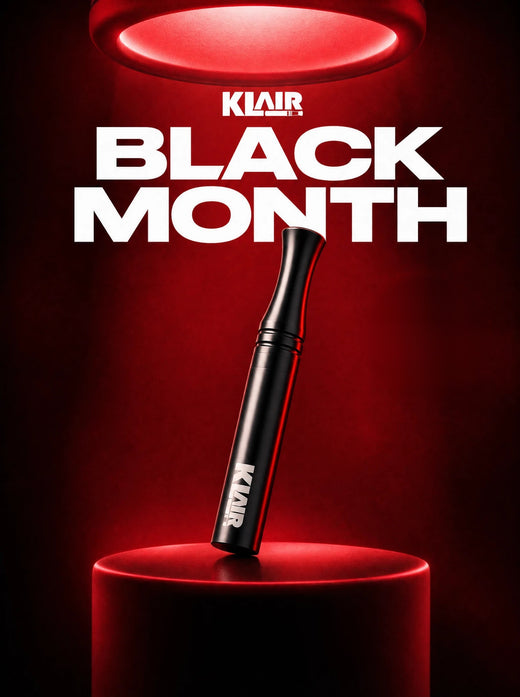
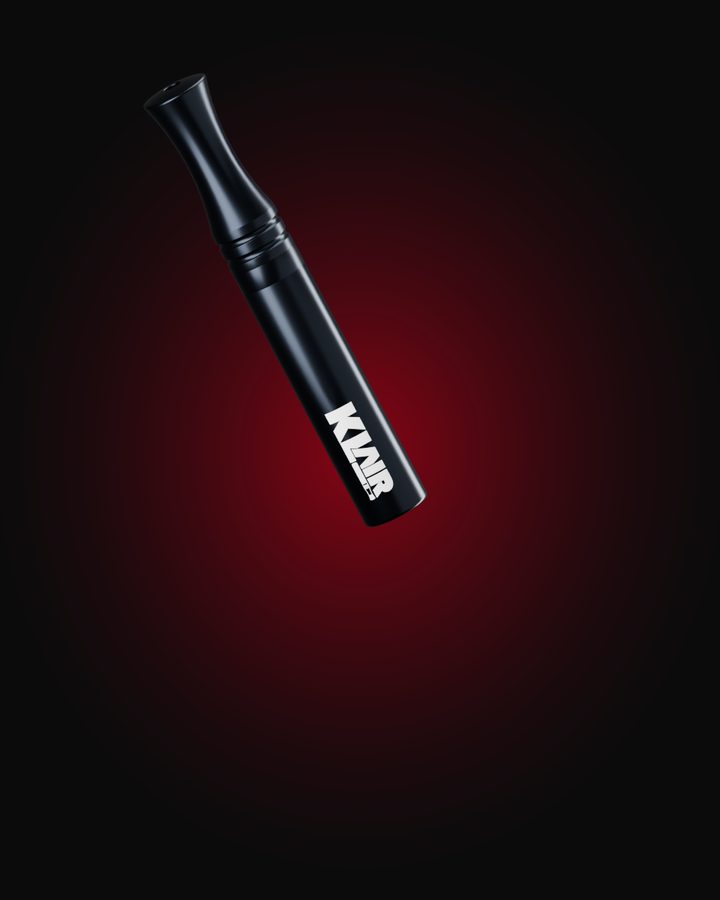
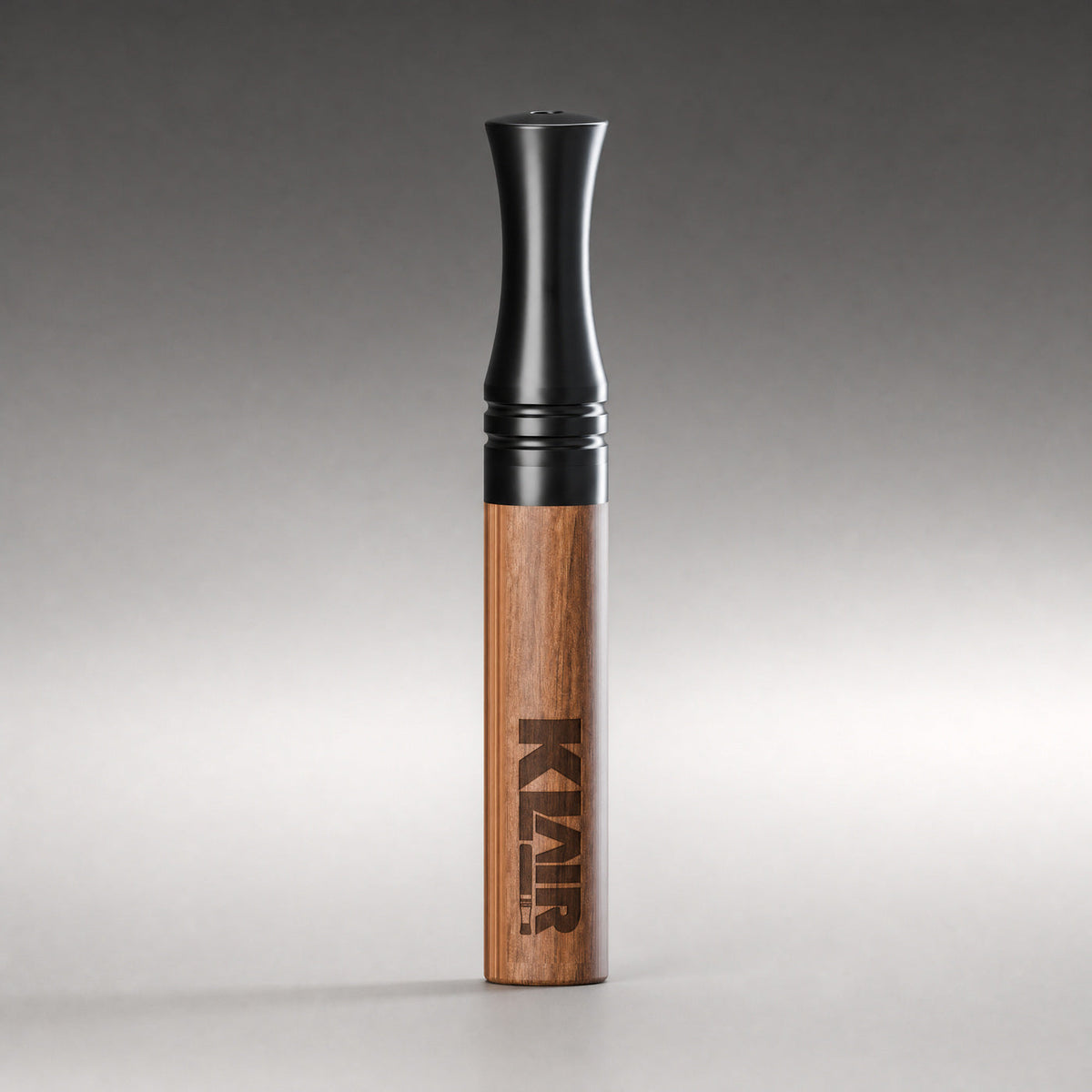
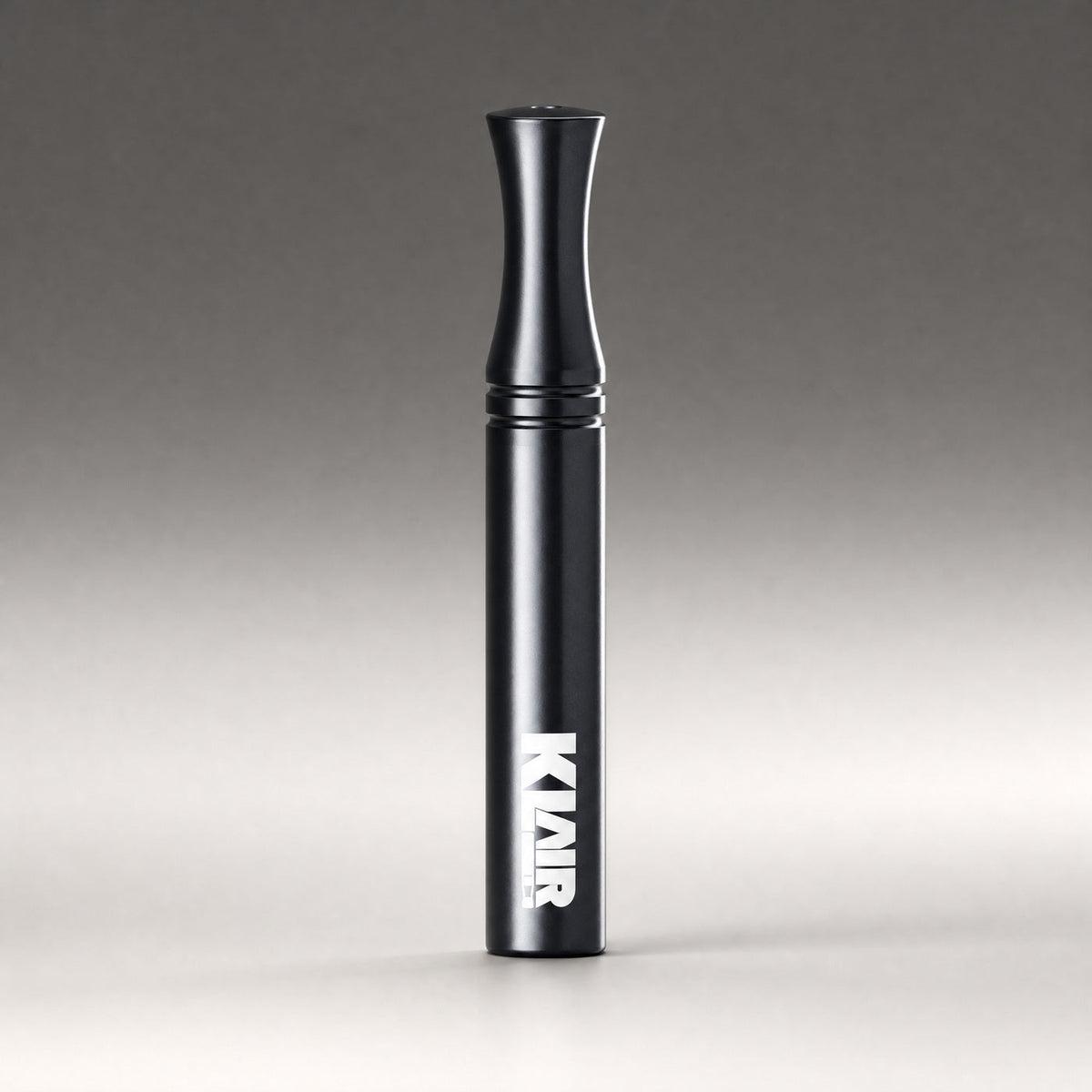
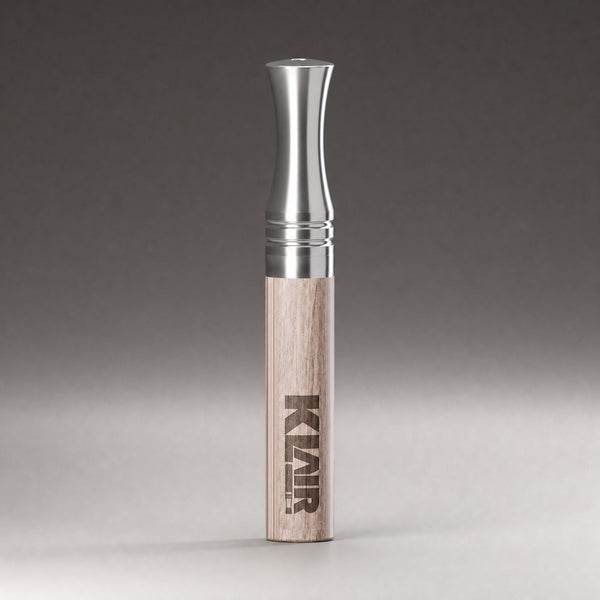
KLAIR is a mechanical inhaler with no tobacco, no nicotine and no electronics. You hold it in your hand, bring it to your mouth, draw on it and taste a flavor.
That way, it covers more parts of the action than a single object for the hand or for the mouth. We don't claim that it helps you quit. What's known about sensorimotor replacement was summarized by Przulj, McRobbie and Hajek in 2012: it can enhance nicotine replacement therapy, but on its own it's probably not useful.
What we don't know about this
Three limitations belong here.
Fidget research isn't quit-smoking research. Karlesky and Isbister studied people at their desks, not people in withdrawal. Applying it is an obvious step, but it hasn't been tested.
The calculation of hand movements is our own. The 200 draws are documented; the dozen hand movements per cigarette is a description of the routine, not a measurement.
There are no known studies on the design of a mechanical aroma inhaler. That applies to KLAIR as well as to any comparable device.
The key points in brief
Smoking kept your hand busy far beyond the 200 draws. Lighting, holding, twirling, tapping and stubbing out come on top, every day, for years.
Research on such side activities describes them as tools for self-regulation. But it doesn't prove that a substitute object has any effect.
The most important thing is the distinction in everyday life. A craving comes in waves of three to five minutes; restlessness is a baseline state. If you mix the two up, you reach for the wrong countermeasure.
Sources
- Deximed, Deutsche Experteninformation Medizin: Quitting smoking. 200 times a day, 73,000 a year, plus the advice not to confuse restlessness with craving. deximed.de (accessed August 20, 2026)
- National Institute on Drug Abuse (NIDA): How does tobacco deliver its effects? Around ten puffs per cigarette. nida.nih.gov (accessed August 20, 2026)
- Karlesky, M., Isbister, K. (2016): Understanding Fidget Widgets, Exploring the Design Space of Embodied Self-Regulation. Proceedings of the 9th Nordic Conference on Human-Computer Interaction (NordiCHI). researchgate.net (accessed August 20, 2026)
- Karlesky, M., Isbister, K. (2014): Fidget widgets, secondary playful interactions in support of primary serious tasks. CHI Extended Abstracts on Human Factors in Computing Systems. researchgate.net (accessed August 20, 2026)
- Rose, J. E., Behm, F. M., Levin, E. D. (1993): Role of nicotine dose and sensory cues in the regulation of smoke intake. Pharmacology Biochemistry and Behavior 44(4), 891 to 900. Twelve adult male smokers. pubmed.ncbi.nlm.nih.gov (accessed August 20, 2026)
- Przulj, D., McRobbie, H., Hajek, P. (2012): The Effect of Sensorimotor Replacement on Smoking Cessation and Craving. The Open Addiction Journal 5, 41 to 50.
- stopsmoking.ch: Dealing with withdrawal. Irritability and nervousness as a separate symptom. stopsmoking.ch (accessed August 20, 2026)
- stopsmoking.ch: Craving, an irresistible urge. Usually lasts three to five minutes. stopsmoking.ch (accessed August 20, 2026)
- Tiffany, S. T. (1990): A cognitive model of drug urges and drug-use behavior, role of automatic and nonautomatic processes. Psychological Review 97(2), 147 to 168.



Leave a comment
All comments are moderated before being published.
This site is protected by hCaptcha and the hCaptcha Privacy Policy and Terms of Service apply.