








If you smoke 20 cigarettes a day, you bring your hand to your mouth about 200 times. That's around 1,400 repetitions a week, 6,000 a month and 73,000 a year. This number explains why something is missing after you quit that has nothing to do with nicotine.
In short
- 20 cigarettes with about ten draws each add up to around 200 hand-to-mouth movements a day.
- Over a year, that's about 73,000 repetitions, according to Deximed.
- A movement repeated that often runs on autopilot and no longer needs a decision.
- Restlessness after quitting is not the same as a craving for nicotine.
- How long a new habit takes varies a lot. One study found a median of 66 days, with a range of 18 to 254.
The math
The number isn't ours. Two independent sources arrive at the same result.
The US National Institute on Drug Abuse describes a smoker taking about ten draws per cigarette. At a pack a day, that's 200 repetitions.
Deximed projects the same movement over longer periods.
| Period | Hand-to-mouth movements |
|---|---|
| Day | about 200 |
| Week | about 1,400 |
| Month | about 6,000 |
| Year | about 73,000 |
If you smoke for ten years, that puts you in the high six figures. That's the real point.
Why the number is bigger than it sounds
200 times a day sounds like little, as long as you don't compare it with other everyday movements.
The movement is always the same: reach, bring it to your mouth, draw, lower it. It has a fixed sequence, a fixed length and a fixed end.
And it happens in the same situations. After getting up, after eating, on a break, in the car, before going to bed.
Repetition plus a fixed context is exactly the recipe for a habit.
What turns a movement into a habit
In research, this is called an automated action pattern. In a widely cited model from 1990, Tiffany described how well-practiced drug-use actions run largely without conscious control.
The core of the model: As long as the action can run undisturbed, it needs hardly any attention. Only when it's blocked does it become conscious and feel like an effort.
That explains an everyday observation. While smoking, nobody thinks about the movement; when quitting, you think about nothing else.
The blockage creates the attention. Not the other way around.
Why the cue triggers so reliably
The second half of the explanation isn't in the movement, but in the situation.
In a 1999 meta-analysis, Carter and Tiffany evaluated 41 studies on so-called cue reactivity. The result: Cues linked to use reliably trigger craving.
The cue doesn't have to be the cigarette itself. The mug is enough, the end of the workday, the balcony, the person you always smoked with.
That's why craving comes in waves and not evenly. It follows your daily routine.
How long a wave like this lasts and what happens during those minutes is something we've written up separately.
Restlessness isn't craving
This distinction is the most practically useful part of the whole topic.
Deximed says it directly: Because the hand movement has become a habit, restlessness after quitting is normal and shouldn't be confused with a craving to smoke.
That's more than a question of wording. If you read the restless feeling as a craving for nicotine, you're more likely to reach for a cigarette.
If you read it as your hands having nothing to do, you look for something to do. Those are two different reactions to the same feeling.
The sorted collection of answers for your hands is in the pillar article of this category.
How long it takes for something new to stick
There's one number going around that's wrong, and one that's right.
The common claim of 21 days has no solid basis. In 2010, Lally and colleagues studied in the European Journal of Social Psychology how everyday habits actually form.
96 people chose a new daily action and reported for 84 days how automatic it felt. The median to reach a plateau was 66 days, with a range of 18 to 254 days.
Two caveats belong here. The study was about simple everyday actions like drinking water, not quitting smoking, and not all participants reached the plateau.
So the number works as a ballpark. It doesn't work as a promise.
What this means for quitting
Three conclusions follow directly from the numbers above.
- The movement doesn't disappear with the substance. Nicotine is broken down within a few days; last year's 73,000 repetitions are not.
- Context matters more than intention. If the cue triggers reliably, the question isn't whether craving will come, but what happens instead in that moment.
- Think in months, not days. If you expect the restlessness to be gone after two weeks, you'll read a normal interim result as failure.
That's uncomfortable. But it's the more honest expectation.
What we don't know
The obvious conclusion would be to simply replace the movement. That's exactly where the evidence gets thin.
In 2012, Przulj, McRobbie and Hajek summarized in the Open Addiction Journal what's known about sensorimotor replacement. Their finding: It can boost nicotine replacement therapy, but on its own it's probably not useful.
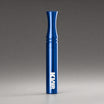
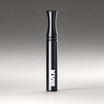
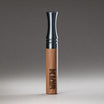
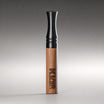
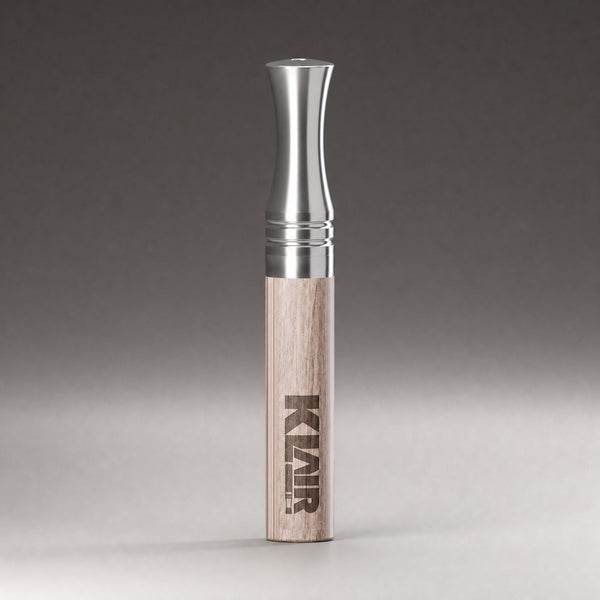
That's what the literature says, and we're writing it down even though we make a product for the hand ourselves.
The key points
A pack a day means about 200 hand-to-mouth movements, about 1,400 a week and about 73,000 a year. This repetition turns a movement into an automated action pattern tied to situations.
That's why, after quitting, a restlessness remains that isn't a craving for nicotine. If you keep the two apart, you react to it differently.
And plan on months. The median in habit research is 66 days, and the range goes up to more than eight months.
Sources
- National Institute on Drug Abuse (NIDA): How does tobacco deliver its effects? About 10 draws per cigarette, 200 a day at a pack a day. nida.nih.gov (accessed August 24, 2026)
- Deximed, German expert information on medicine: Quitting smoking. 200 times a day, 1,400 a week, 6,000 a month, 73,000 a year. deximed.de (accessed August 24, 2026)
- Tiffany, S. T. (1990): A cognitive model of drug urges and drug-use behavior, role of automatic and nonautomatic processes. Psychological Review 97(2), 147 to 168.
- Carter, B. L., Tiffany, S. T. (1999): Meta-analysis of cue-reactivity in addiction research. Addiction 94(3), 327 to 340.
- Lally, P., van Jaarsveld, C. H. M., Potts, H. W. W., Wardle, J. (2010): How are habits formed, modelling habit formation in the real world. European Journal of Social Psychology 40(6), 998 to 1009. onlinelibrary.wiley.com (accessed August 24, 2026)
- Przulj, D., McRobbie, H., Hajek, P. (2012): The Effect of Sensorimotor Replacement on Smoking Cessation and Craving. The Open Addiction Journal 5, 41 to 50.
- stopsmoking.ch: The 3 forms of dependence. stopsmoking.ch (accessed August 24, 2026)
- stopsmoking.ch: Dealing with withdrawal, tips and activity strategies. stopsmoking.ch (accessed August 24, 2026)
- stopsmoking.ch: Nicotine inhaler, availability. stopsmoking.ch (accessed August 24, 2026)
- stopsmoking.ch: Free quit-smoking phone counseling, 0848 000 181. stopsmoking.ch (accessed August 24, 2026)




Leave a comment
All comments are moderated before being published.
This site is protected by hCaptcha and the hCaptcha Privacy Policy and Terms of Service apply.