




A single sentence is enough. Under Article 4 of the Therapeutic Products Act, a product is a medicine if it is intended or promoted for medical action on the body. It's not just the composition that decides, but also what someone writes about it.
In short
- The Therapeutic Products Act treats promotion the same as intended purpose.
- If you write that a product helps you quit, you may legally be turning it into a medicine.
- A medicine needs an authorization with clinical data. We don't have that.
- That's why nowhere on our site does it say that KLAIR helps you quit smoking.
- We think that's right, even apart from the law.
What the law says
The decisive sentence is in Article 4, paragraph 1, letter a of the Therapeutic Products Act.
According to it, medicines are products of chemical or biological origin that are intended or promoted for medical action on the human or animal body. The detection, prevention or treatment of diseases is explicitly mentioned.
The phrase “are intended or promoted” is the core. Either one is enough.
Accordingly, Swissmedic explains in its classification documents that the intended purpose determines which law applies to a product. The same preparation can fall under different sets of rules depending on how it's marketed.
Why the word “promoted” carries so much weight
For aroma products, this sentence is especially sharp.
Swissmedic has its own fact sheet on classifying essential oils. The reason is that exactly these products keep generating questions about where the line is.
A product that just smells or tastes like something is unproblematic. As soon as someone adds that it calms you, helps with withdrawal or eases cravings, it becomes a medical claim.
And that claim has to be backed up. Not with testimonials, but with an authorization.
That's the reason why our whole blog is worded so carefully.
What we don't write because of this
It's a short list, and it's binding.
We don't write that KLAIR helps you quit smoking. We don't write that it reduces cravings, makes withdrawal easier or supports cessation. We don't call it a smoking cessation product.
We don't claim it's harmless either. Saying a product is proven to be harmless is also a claim that would have to be backed up.
And we never call KLAIR a vape, an e-cigarette or a nicotine-free vape. It doesn't vaporize anything, it contains no electronics, and the term would simply be wrong.
What we write instead
What's left is the description, and that's enough.
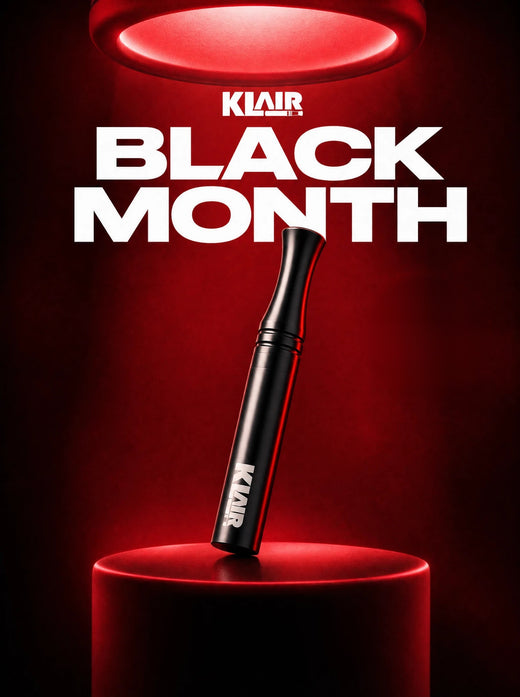
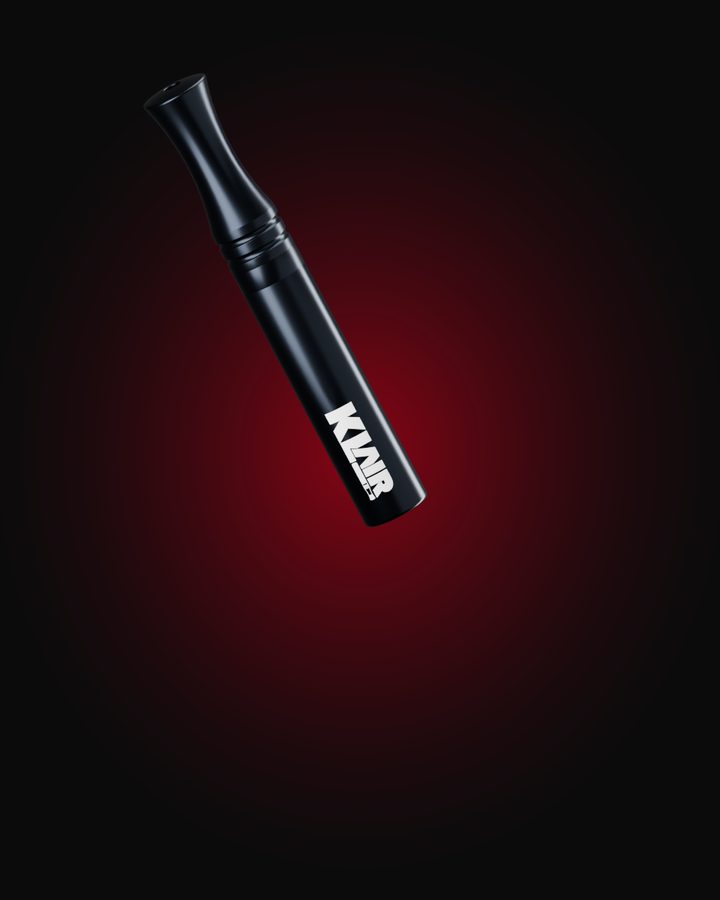
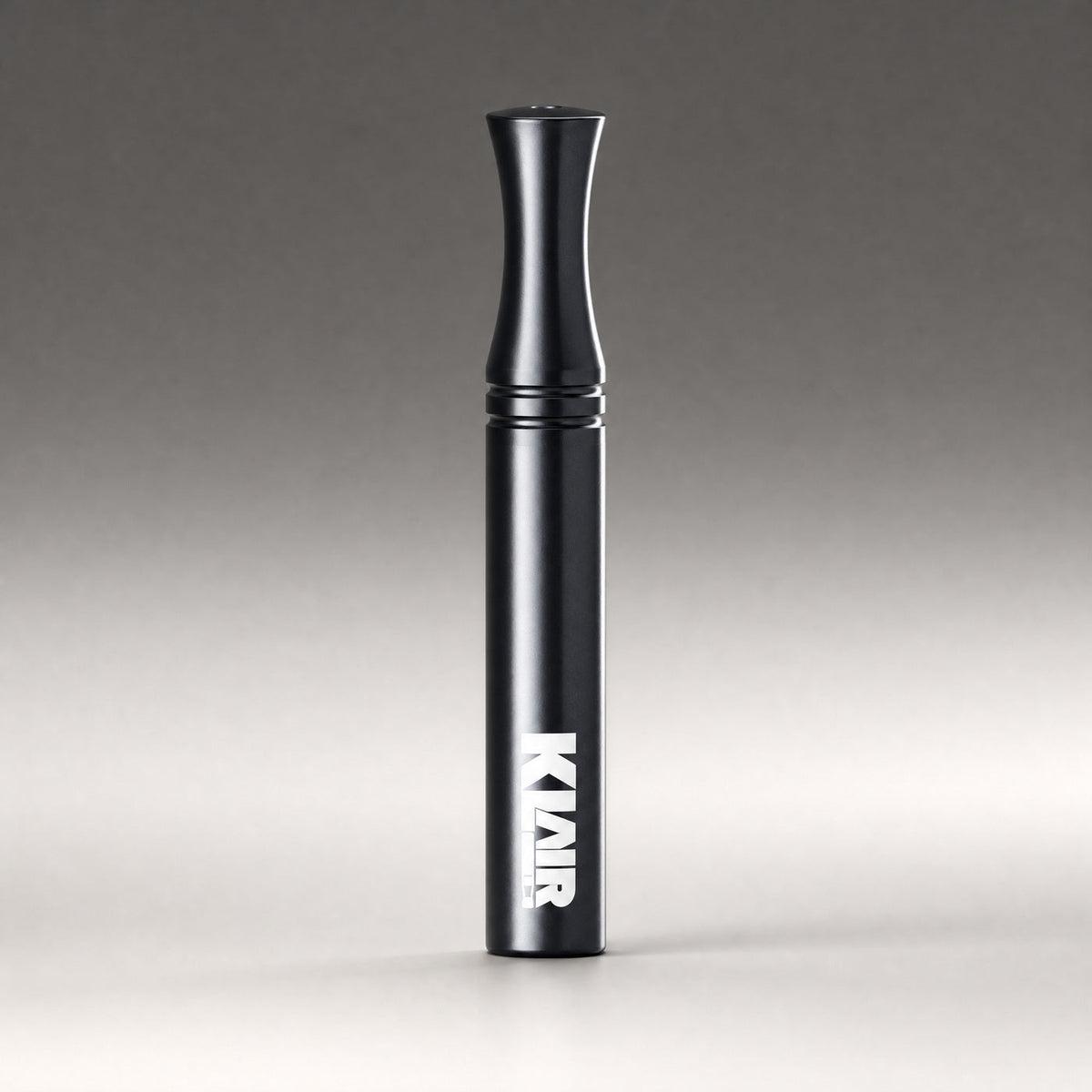
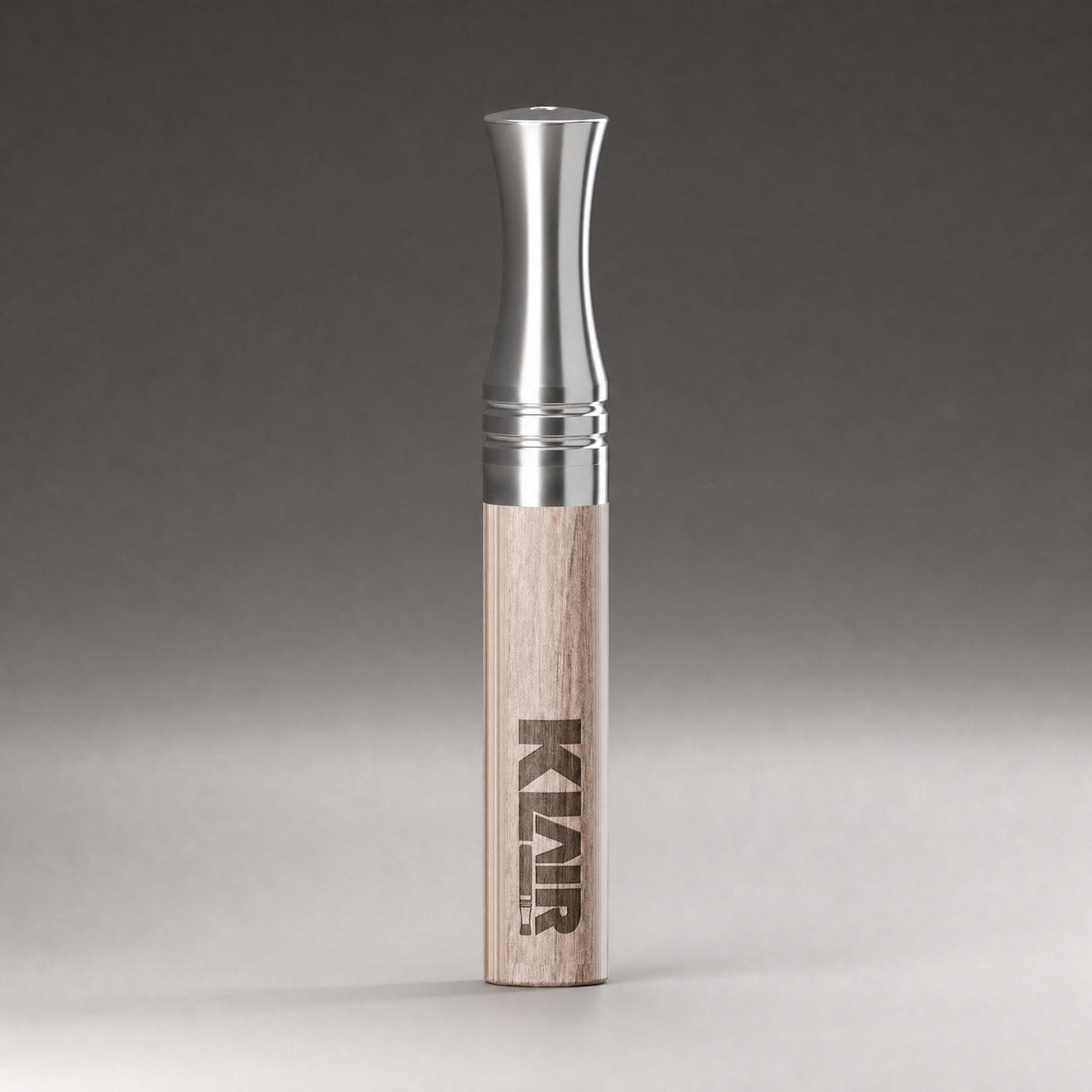
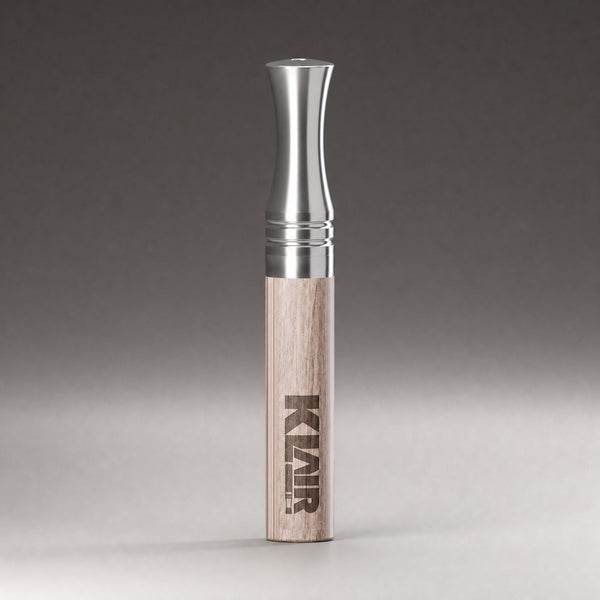
KLAIR is a mechanical inhaler without tobacco, without nicotine and without electronics. You insert a cotton capsule, bring the pen to your mouth, draw on it and taste a flavor.
That can be verified. Every sentence of it describes what the product is and what you do, not what it does inside you.
On research, we say what's known. In 2012, Przulj, McRobbie and Hajek summarized that sensorimotor replacement can enhance nicotine replacement therapy and on its own is unlikely to be useful. There are no known studies on our type of device.
What KLAIR can and can't do draws this line in detail.
What this costs us
This stance isn't free, and it would be dishonest to keep quiet about that.
The obvious search terms in this market are effect terms. If you write “helps you quit smoking,” you get found for those searches. If you don't write it, you don't.
The same goes for sales copy. A promise sells better than a description, at least in the short term.
We accept this disadvantage. The price of the shortcut would be legal proceedings, and the price of legal proceedings would be the product.
Why we'd do it this way even without the law
Quitting smoking is a health issue, and the market around it is full of promises.
On March 30, 2026, AT Schweiz reported products to the Federal Office of Public Health that were sold as nicotine-free and contained between 10 and 66 milligrams of nicotine. That's not a borderline case; that's a false statement on the packaging.
In an environment like that, restraint sets you apart. Anyone who openly says what they don't know is more credible than anyone who promises everything.
Then there's the most important point: 76.3 percent of former daily smokers in Switzerland managed without any aids at all. A product that presents itself as necessary would misinform these people.
Where the classification remains open
There's one thing we can't answer conclusively.
The Tobacco Products Act doesn't apply to KLAIR, because no tobacco, no nicotine and no electronics are involved. Where the product should be classified instead isn't up to the manufacturer.
The binding classification is made by the authorities. We neither determine it here nor anticipate it.
What we can do is keep the description clean. That's exactly what this article describes.
If you notice something on our site
This standard applies to our entire presence, not just the blog.
Texts grow over the years, and wording from earlier times sometimes still lingers somewhere. If you come across a statement on our pages that claims an effect, it's a mistake, not fine print.
In that case, write to us. We'll correct it.
The key points at a glance
Under Article 4 of the Therapeutic Products Act, promotion is enough to make a product a medicine. The intended purpose decides, not just the contents.
That's why nowhere on our site does it say that KLAIR helps you quit, reduces cravings or is harmless. We describe what the product is and what you do with it.
That costs visibility and sales. It's still the only position we can hold.
Sources
- Federal Act on Medicinal Products and Medical Devices (Therapeutic Products Act, HMG, SR 812.21), Article 4, paragraph 1, letter a: Medicines are products of chemical or biological origin that are intended or promoted for medical action on the human or animal body, in particular for the detection, prevention or treatment of diseases, injuries and disabilities. fedlex.admin.ch (accessed August 20, 2026)
- Swissmedic: Criteria for distinguishing therapeutic products from foodstuffs. The intended purpose determines the applicable law. swissmedic.ch (accessed August 20, 2026)
- Swissmedic: Fact sheet on the classification of essential oils, classification criteria. swissmedic.ch (accessed August 20, 2026)
- Federal Act on Tobacco Products and Electronic Cigarettes (TabPG, SR 818.11), Article 18 on protection against deception. fedlex.admin.ch (accessed August 20, 2026)
- Federal Act against Unfair Competition (UWG, SR 241), Article 3, paragraph 1, letter b. fedlex.admin.ch (accessed August 20, 2026)
- AT Schweiz, March 30, 2026: Report to the FOPH on pouches declared as nicotine-free containing 10 to 66 milligrams of nicotine. at-schweiz.ch (accessed August 20, 2026)
- Przulj, D., McRobbie, H., Hajek, P. (2012): The Effect of Sensorimotor Replacement on Smoking Cessation and Craving. The Open Addiction Journal 5, 41 to 50.
- AT Schweiz: Smoking cessation, data and figures. 76.3 percent of former daily smokers without aids. at-schweiz.ch (accessed August 20, 2026)
- Krebsliga Schweiz: stopsmoking counseling service, Quitline 0848 000 181, free and anonymous. krebsliga.ch (accessed August 21, 2026)


Leave a comment
All comments are moderated before being published.
This site is protected by hCaptcha and the hCaptcha Privacy Policy and Terms of Service apply.