




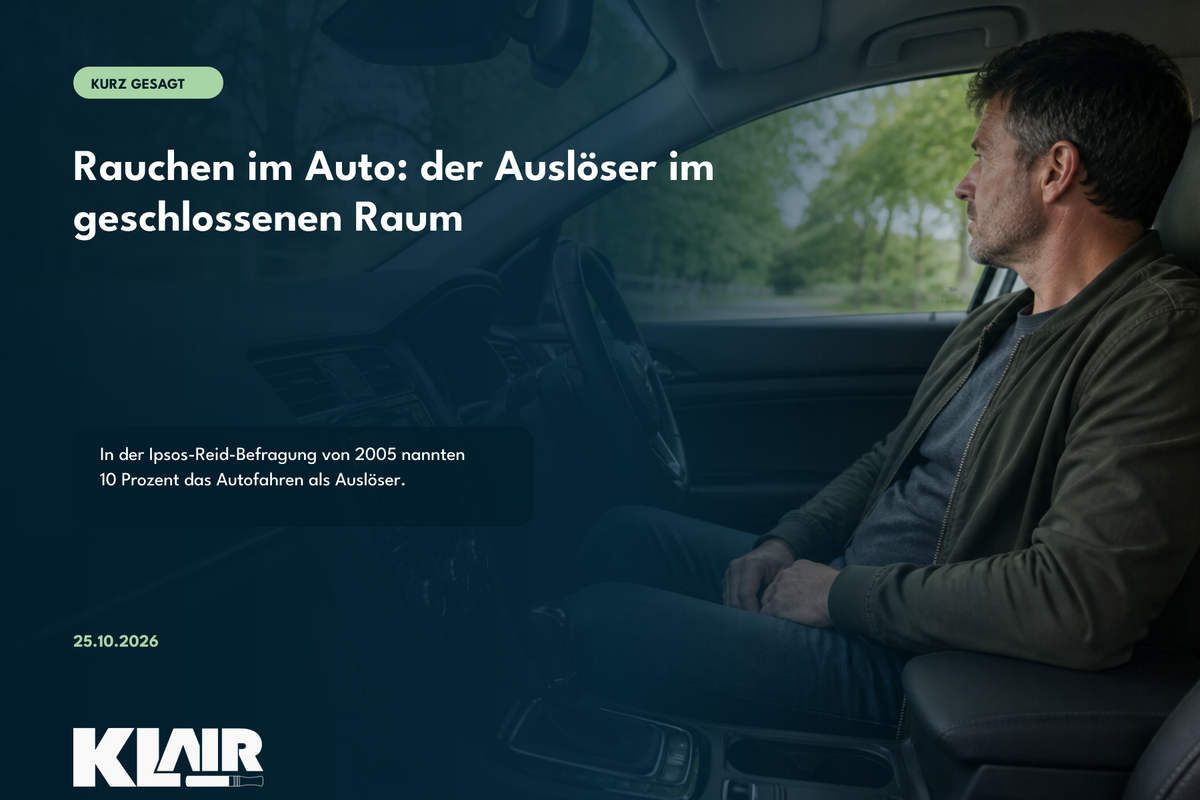
In a Canadian survey, about 10 percent of smokers named driving as a trigger for reaching for a cigarette. The car is a small space that's always the same, where you sit and wait. That exact combination makes the habit especially stubborn there.
In short
- In the 2005 Ipsos Reid survey, 10 percent named driving as a trigger.
- The car delivers the same set of cues every day: the same seating position, the same route, the same music.
- In 1999, Carter and Tiffany showed across 41 studies that cues reliably trigger craving.
- In Switzerland, there's no smoking ban in private cars, while several neighboring countries have one when children are on board.
- Under Article 31 of the Road Traffic Act, you must be in control of your vehicle at all times. That applies to anything you handle at the wheel.
Why the car of all places
The car is the most standardized place in your day.
You get in, always sit the same way, turn the same key. The way to work is the same, the traffic jam comes at the same spot. If you've smoked in this sequence for years, the cigarette has become part of the sequence.
In 1999, Carter and Tiffany analyzed forty-one studies. Their finding: cues linked to smoking reliably trigger craving.
Back in 1990, Tiffany described smoking as an automated action pattern. The reach happens before you decide on it.
On top of that, in the car you can't do anything else. Your hands are busy, your mind isn't.
What the numbers tell us
There are no solid Swiss figures on smoking in the car.
The most frequently cited breakdown comes from a 2005 Ipsos Reid survey of 1,000 people in Canada. 41 percent named after a meal as a trigger, 40 percent a drink, 26 percent stress, 10 percent driving.
These numbers are old and come from another country. They show a ranking, not Swiss reality.
Driving isn't at the top. Still, for people who commute every day, it's the place where the cigarette is most firmly anchored.
The enclosed space
The inside of a car is small, and that changes the air quickly.
In 2012, Semple and colleagues measured fine particulate matter on 104 trips by 17 drivers, 14 of whom smoked. The trips lasted five to seventy minutes, with an average of 27 minutes. When people smoked, the particulate levels were well above the World Health Organization's guideline values.
An open window lowers the levels, but it doesn't eliminate them.
In Switzerland, there's no smoking ban in private cars. The Federal Act on Protection against Passive Smoking covers enclosed spaces that are open to the public and spaces that serve as a workplace for several people. Your own vehicle isn't one of them.
Several European countries have a ban when children are on board. In Switzerland, this has been called for in parliament but hasn't been implemented so far.
Redesign the car instead of just leaving it out
The cue doesn't go away if you just leave out the cigarette. It goes away when the cue changes.
In practice, that means: empty and remove the ashtray, have the car cleaned thoroughly once, take the lighter out of the compartment. Smell is the strongest single cue in the car, and you can get rid of it.
Then there's the sequence itself. Different music, a podcast, a different route for the first few weeks.
In 2010, Lally and colleagues found a median of 66 days among 96 people before a simple everyday action became a habit. The range went from 18 to 254 days.
So think in weeks, not days.
An if-then plan for the drive
Resolutions work better when they name a situation.
In 2006, Gollwitzer and Sheeran analyzed ninety-four studies with over 8,000 participants. If-then plans showed a medium effect of d equals 0.65.
For the car, a plan like that looks like this. When I start the engine, I first reach for my water bottle. When I'm stuck in traffic, I consciously breathe out three times.
The plan has to be in place before the drive, not during it.
Your emergency plan for the tough minutes goes into this technique in detail.
Where KLAIR fits here, and where it doesn't
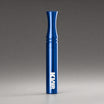
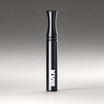
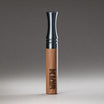
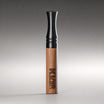
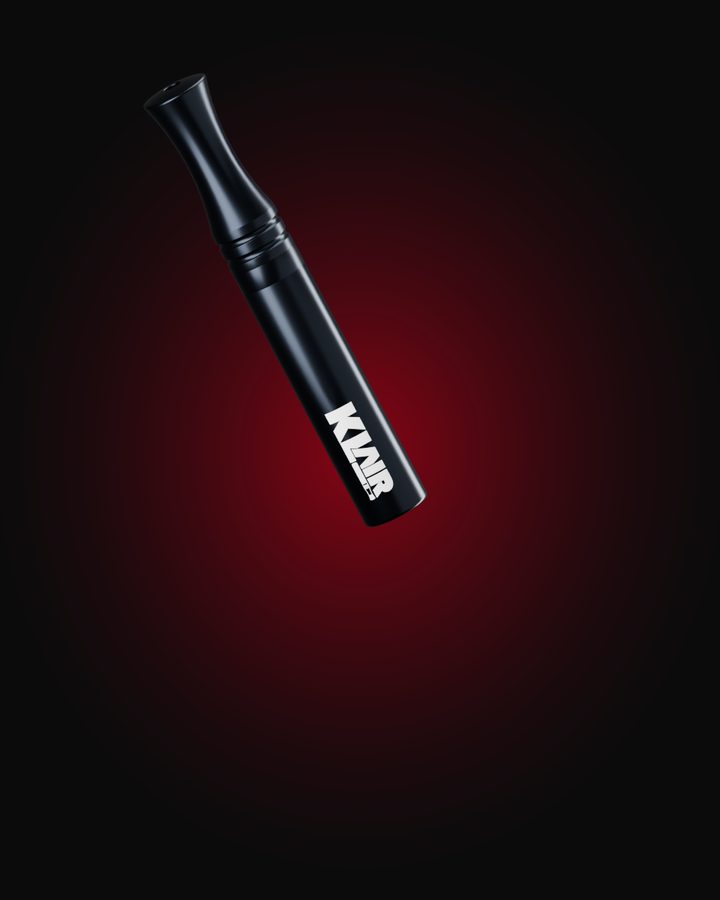
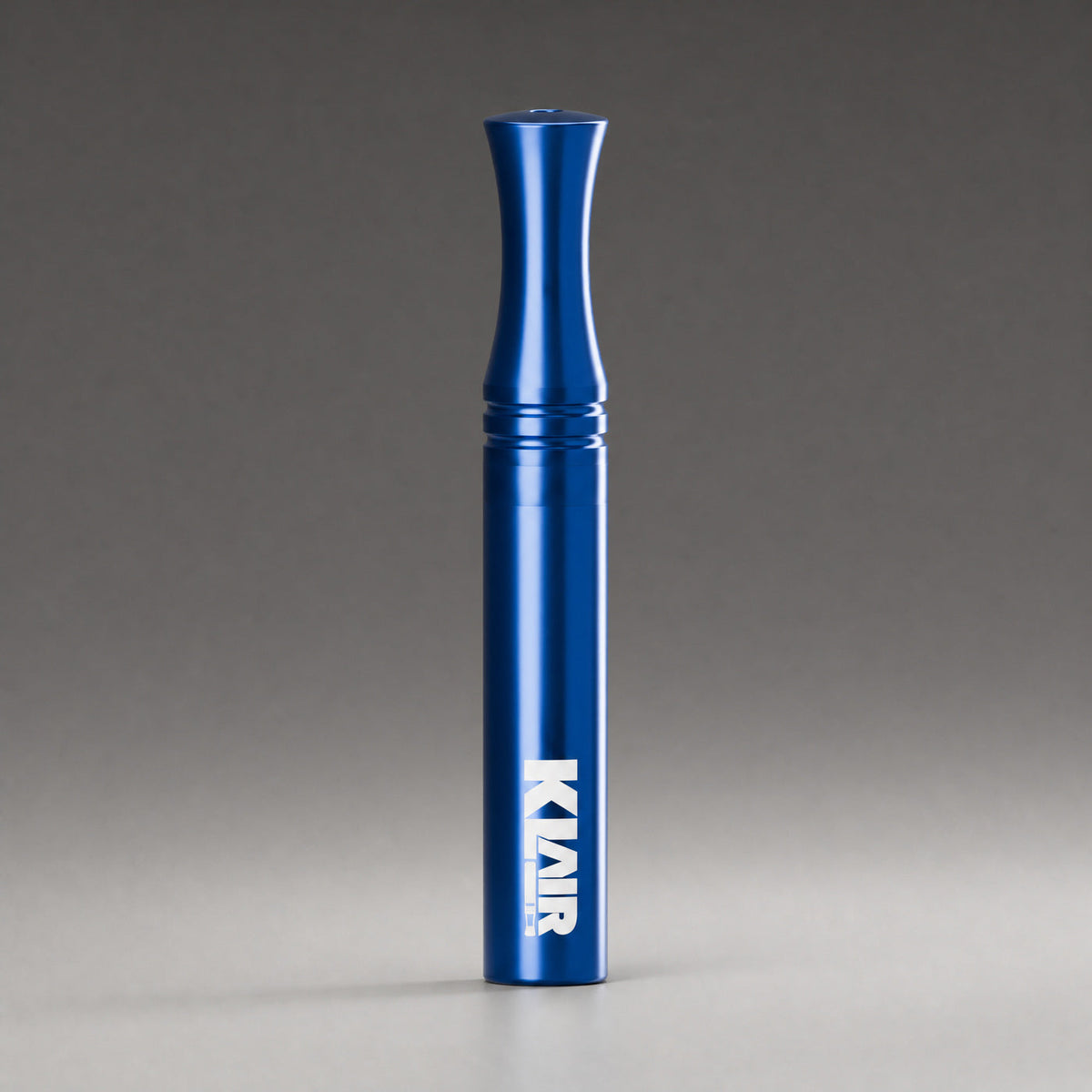
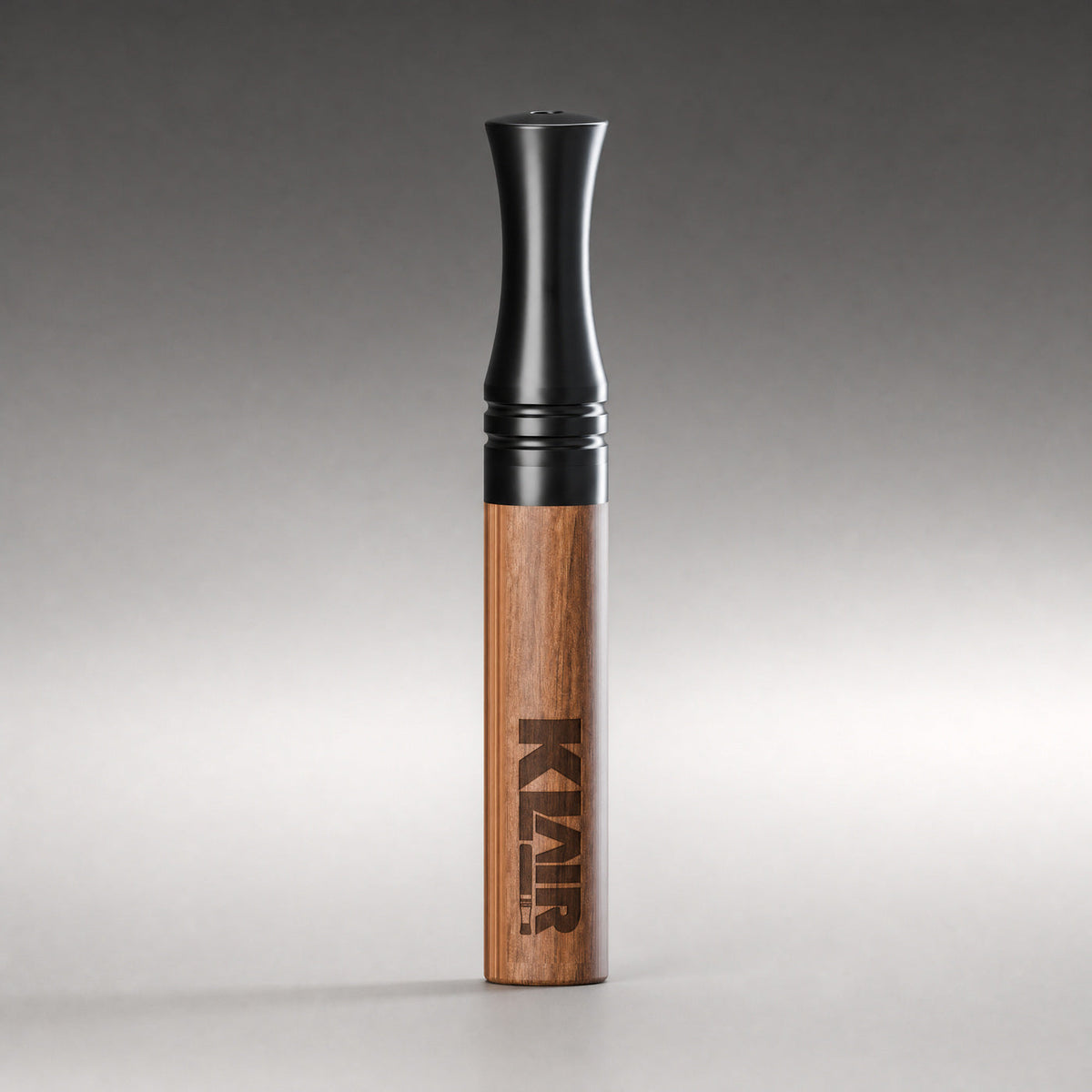
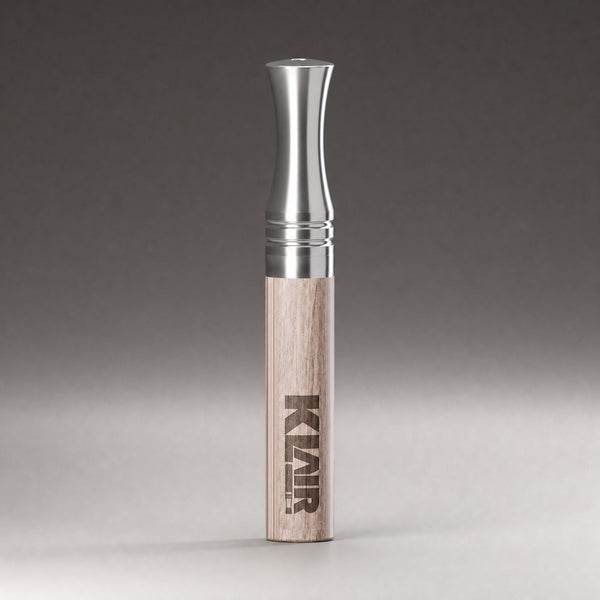
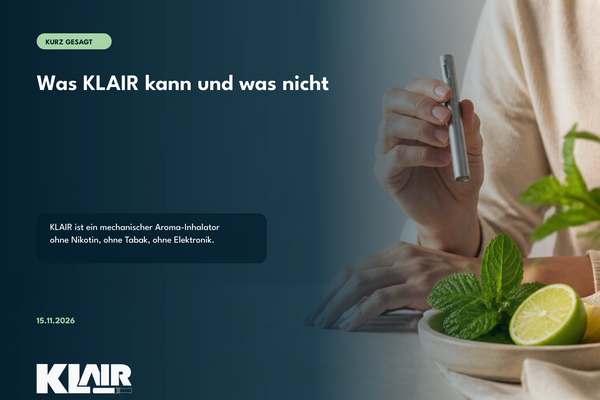
KLAIR is a mechanical inhaler without tobacco, without nicotine and without electronics. You bring it to your mouth, draw on it and taste a flavor.
In the car, it covers the same movement that's gone missing there. We don't claim that it helps you quit. In 2012, Przulj, McRobbie and Hajek concluded that sensorimotor replacement on its own probably isn't useful.
When driving, one point matters more than the product. Under Article 31 Paragraph 1 of the Road Traffic Act, you must always be in control of your vehicle in a way that lets you meet your duty of care.
Anything you handle at the wheel is a distraction. Whatever you use in the car should be within reach and work without looking.
What stays hard
Two things can't be organized away.
The long drive. If you drive four hours straight for work, you have no distraction and no break. The only thing that helps here is to deliberately plan the break instead of getting it through a cigarette.
Someone else's car. If you're riding with someone who smokes, none of your changes apply. This situation is one of the hardest of all.
The key points
The car is a trigger because it delivers the same set of cues every day and gives you nothing to do. About 10 percent named it as a trigger in the 2005 Canadian survey, which puts it behind eating, drinking and stress.
What works is changing the cue instead of just leaving out the cigarette: ashtray out, smell gone, different music, different route. Plus an if-then plan that's in place before you drive off.
Expect it to take weeks. And don't let anything distract you at the wheel, not even a replacement.
Sources
- Ipsos Reid (2005): Survey of 1,000 people in Canada on smoking triggers. After a meal 41 percent, drink 40 percent, stress 26 percent, friends 20 percent, coffee 11 percent, party 11 percent, driving 10 percent.
- Carter, B. L., Tiffany, S. T. (1999): Meta-analysis of cue-reactivity in addiction research. Addiction 94(3), 327 to 340. Analysis of 41 studies. pubmed.ncbi.nlm.nih.gov (accessed August 20, 2026)
- Tiffany, S. T. (1990): A cognitive model of drug urges and drug-use behavior. Psychological Review 97(2), 147 to 168.
- Semple, S., Apsley, A., Galea, K. S., MacCalman, L., Friel, B., Snelgrove, V. (2012): Secondhand smoke in cars, assessing children's potential exposure during typical journey conditions. Tobacco Control 21(6), 578 to 583. 17 drivers, 104 trips, duration 5 to 70 minutes, average 27 minutes. tobaccocontrol.bmj.com (accessed August 20, 2026)
- Federal Act on Protection against Passive Smoking (SR 818.31). Scope: enclosed spaces that are open to the public or serve as a workplace for several people. fedlex.admin.ch (accessed August 20, 2026)
- AT Schweiz: Federal laws on passive smoking. Overview of the scope and the cantonal additions. at-schweiz.ch (accessed August 20, 2026)
- Road Traffic Act (SVG, SR 741.01), Article 31 Paragraph 1: "The driver must always be in control of the vehicle in such a way that he can meet his duty of care." fedlex.admin.ch (accessed August 20, 2026)
- Lally, P., van Jaarsveld, C. H. M., Potts, H. W. W., Wardle, J. (2010): How are habits formed, modelling habit formation in the real world. European Journal of Social Psychology 40(6), 998 to 1009. n equals 96, median 66 days, range 18 to 254.
- Gollwitzer, P. M., Sheeran, P. (2006): Implementation intentions and goal achievement, a meta-analysis of effects and processes. Advances in Experimental Social Psychology 38, 69 to 119. 94 studies, over 8,000 participants, d equals 0.65.
- Przulj, D., McRobbie, H., Hajek, P. (2012): The Effect of Sensorimotor Replacement on Smoking Cessation and Craving. The Open Addiction Journal 5, 41 to 50.
- stopsmoking.ch: Craving, an irresistible urge. Usually lasts three to five minutes. stopsmoking.ch (accessed August 20, 2026)


Leave a comment
All comments are moderated before being published.
This site is protected by hCaptcha and the hCaptcha Privacy Policy and Terms of Service apply.