




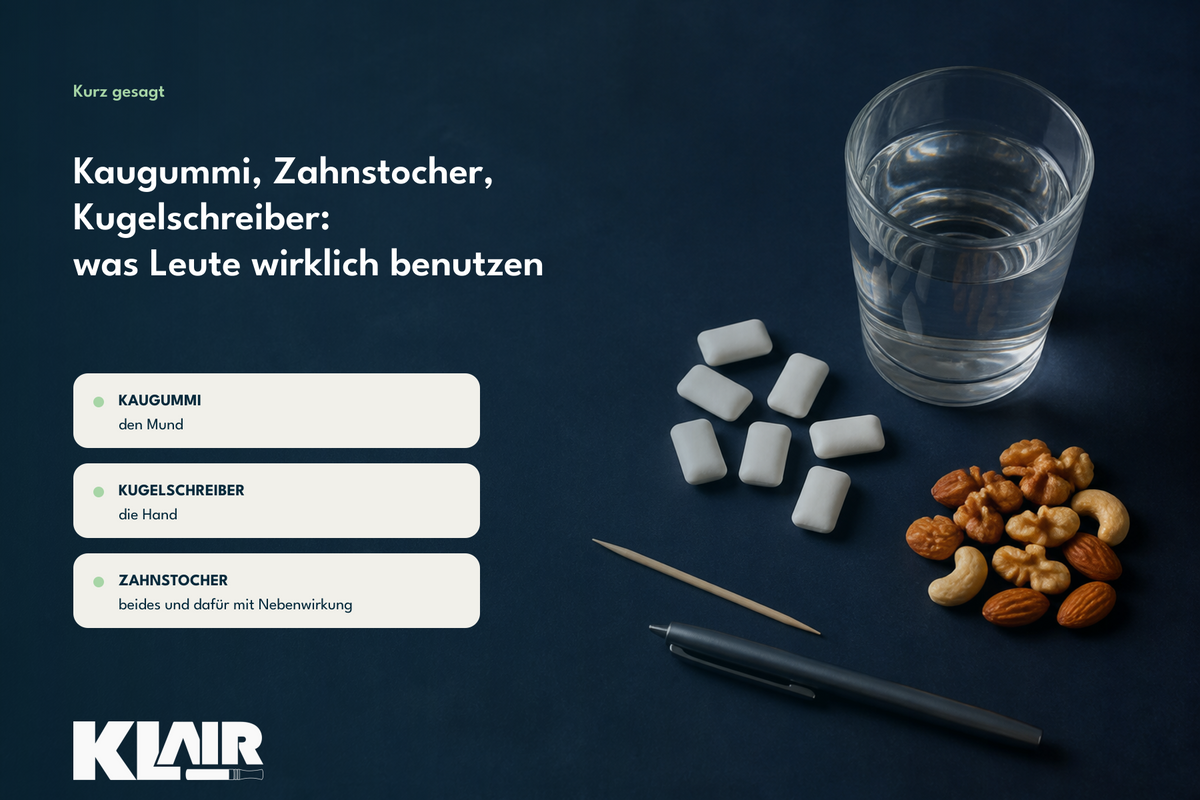
Someone who smokes a pack a day brings their hand to their mouth around 200 times a day. After quitting, this movement disappears without a replacement, and most people fill the gap with whatever happens to be around. Gum, toothpicks, pens, nuts. This list sorts the usual makeshift aids, along with what doesn't fit about them.
In short
- Deximed estimates around 200 hand-to-mouth movements a day, 73,000 a year.
- The official recommendations almost all come down to gum, vegetables or nuts.
- Sugar-free gum often contains sorbitol, which has a laxative effect in larger amounts.
- In 1993, Rose and colleagues showed that smokers adjust their behavior more to the sensory experience than to the amount of nicotine.
- In 2012, Przulj, McRobbie and Hajek summarized: sensorimotor replacement alone is unlikely to be useful.
What the experts recommend
The recommendations from official bodies are remarkably consistent and remarkably short.
stopsmoking.ch suggests carrot sticks, cherry tomatoes, a water bottle and sugar-free gum. The German Rauchfrei portal recommends keeping healthy substitutes on hand that you can put between your lips.
That's not wrong. It's just strikingly brief for a need that comes up 200 times a day.
The rest of this article fills the gap as well as the evidence allows.
Where the number 200 comes from is explained in a separate article.
Gum
The most common aid, and the most widely available.
Gum covers the oral part. It doesn't cover the hand movement, because once it's in your mouth, your hand is free again.
Sugar-free varieties usually contain sugar alcohols like sorbitol. The Gastrointestinal Society points out that sorbitol is poorly absorbed in the small intestine and can have a laxative effect. According to this account, discomfort can start at around five grams a day, while the industry figure is around 40 grams.
If you're struggling with constipation after quitting anyway, you might experience that as a benefit. If you have gum in your mouth all day, probably not.
Not to be confused with nicotine gum from the pharmacy. That's a medicine with proven effects and is used differently.
Toothpicks, straws, pens
These three show up in every informal collection, but in no official recommendation.
The toothpick matches the gesture most closely. It's thin, it goes between your lips, it keeps your hand busy. None of the expert sources we checked recommends it as a long-term solution, and a pointed piece of wood in your mouth for hours is clearly not what it's made for.
The straw comes close to the movement and looks odd in company. That's exactly its problem.
The pen keeps your hand busy and your mouth not at all. It's the most widespread and the poorest fit.
Vegetables and nuts
The standard advice, and the one with a built-in side effect.
Carrots and cherry tomatoes work for the mouth. But they're food, and food is exactly the replacement behavior that tends to increase after quitting anyway.
stopsmoking.ch cites an average weight gain of 3.14 kg. The Swiss Heart Foundation estimates around 200 fewer calories burned per pack after quitting.
In this respect, nuts are the least favorable item on the list.
Why the obvious only half fits
What all these aids have in common: they cover part of the ritual, never the whole thing.
In 1993, Jed Rose and his co-authors showed something surprising with twelve male smokers. The participants adjusted how they drew on the cigarette more to the sensation in the throat than to the amount of nicotine.
In 2007, Rose described experiments with denicotinized cigarettes in Addiction. Smoking without nicotine clearly eased cravings, in some cases more than nicotine without the ritual.
So the ritual isn't just a side detail. That explains why a pen feels wrong, even though it keeps your hand busy.
What research says about substitutes
Here's the sentence you wouldn't find in a sales pitch.
In 2012, Przulj, McRobbie and Hajek summarized in the Open Addiction Journal what is known about sensorimotor replacement. Their conclusion: it can enhance nicotine replacement therapy, but on its own it is unlikely to be useful.
That applies to gum, toothpicks and straws just as much as to any device that mimics the gesture.
So if you want to quit, you need a plan, not an object. 76.3 percent of former daily smokers in Switzerland managed without any aids at all.
Where KLAIR fits in this list
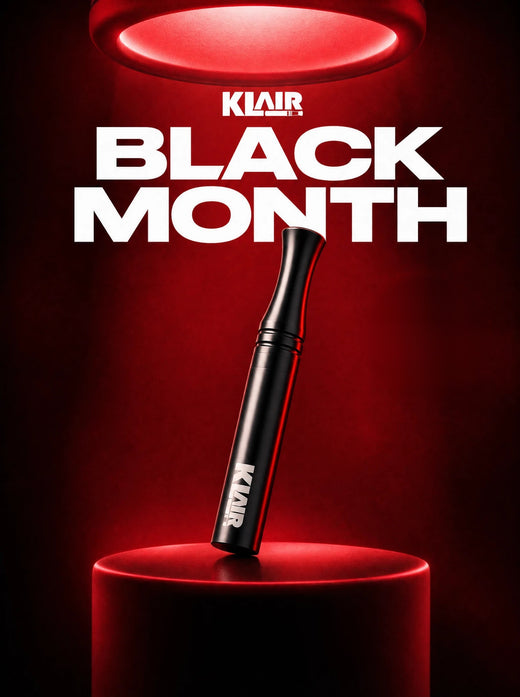
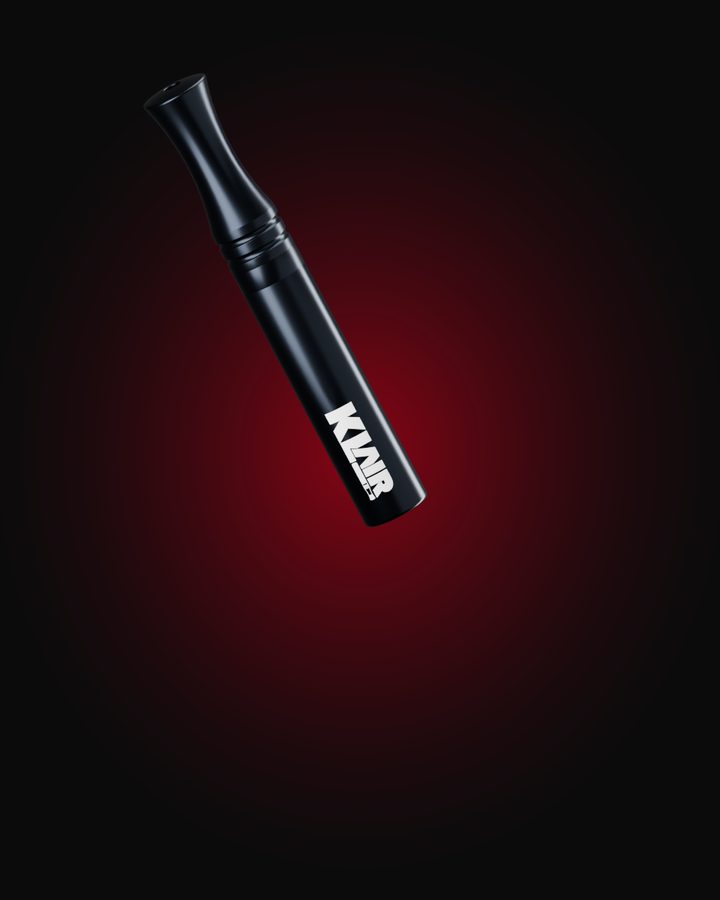
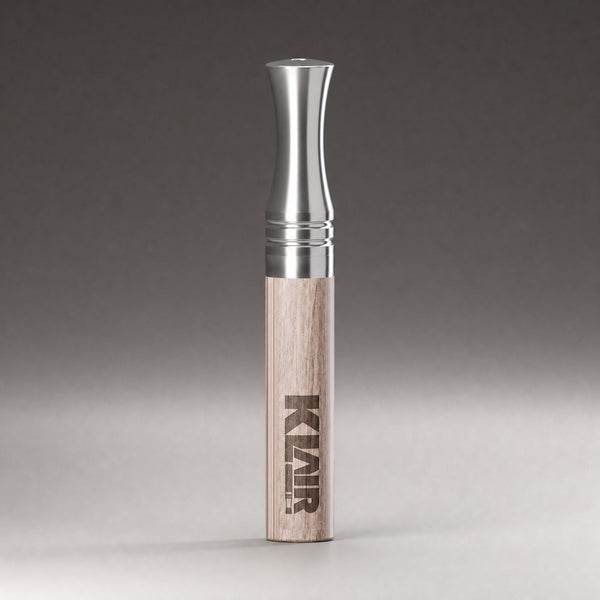
KLAIR is a mechanical inhaler without tobacco, without nicotine and without electronics. You bring it to your mouth, draw on it and taste a flavor.
That way it covers the hand-to-mouth movement, the draw and the taste, so more parts of the ritual than gum does. We don't claim that KLAIR helps you quit. What is known about sensorimotor replacement is explained two sections above.
It's one option among several, and for some people it's the wrong one.
What we don't know about this
Two limitations belong here.
There are no comparative studies on makeshift solutions. Nobody has tested toothpicks against gum against straws. What's written here is derived from the ritual, not from results.
Rose's studies are small and old. Twelve men in the 1993 experiment. They show a mechanism; they don't prove a way out.
The key points at a glance
Your hand goes to your mouth around 200 times a day, and after quitting, that movement is missing. The usual aids each cover only part of it: gum the mouth, the pen the hand, the toothpick both, but with a side effect.
Research shows that the ritual itself and the sensory experience play a role, not just the nicotine. But it also shows that sensorimotor replacement alone is unlikely to lead to quitting.
Use whatever gets you through the three to five minutes. Don't expect more than that from any of these objects.
Sources
- Deximed, Deutsche Experteninformation Medizin: Quitting smoking. 200 times a day, 1,400 a week, 6,000 a month, 73,000 a year. deximed.de (accessed August 20, 2026)
- National Institute on Drug Abuse (NIDA): How does tobacco deliver its effects? Around ten puffs per cigarette. nida.nih.gov (accessed August 20, 2026)
- stopsmoking.ch: Food craving, sudden hunger when quitting. Carrot sticks, cherry tomatoes, sugar-free gum, weight gain of 3.14 kg. stopsmoking.ch (accessed August 20, 2026)
- Rauchfrei portal of the German Federal Institute for Public Health: Tips for craving attacks. “Keep healthy substitutes on hand that you can put between your lips instead of a cigarette.” rauchfrei-info.de (accessed August 20, 2026)
- Gastrointestinal Society: Sugar-free Gum and Candies. Sorbitol is poorly absorbed in the small intestine and has an osmotic effect. badgut.org (accessed August 20, 2026)
- Rose, J. E., Behm, F. M., Levin, E. D. (1993): Role of nicotine dose and sensory cues in the regulation of smoke intake. Pharmacology Biochemistry and Behavior 44(4), 891 to 900. Twelve adult male smokers. pubmed.ncbi.nlm.nih.gov (accessed August 20, 2026)
- Rose, J. E. (2007): Denicotinized cigarettes, a new tool to combat cigarette addiction? Addiction 102(2).
- Przulj, D., McRobbie, H., Hajek, P. (2012): The Effect of Sensorimotor Replacement on Smoking Cessation and Craving. The Open Addiction Journal 5, 41 to 50.
- AT Schweiz: Smoking cessation, data and figures. 76.3 percent of former daily smokers without aids. at-schweiz.ch (accessed August 20, 2026)
- Swiss Heart Foundation (Schweizerische Herzstiftung): Quitting smoking, how to make the next attempt work. Around 200 calories per pack, nicotine as an appetite suppressant. swissheart.ch (accessed August 20, 2026)
- stopsmoking.ch: Craving, an irresistible urge. Usually lasts three to five minutes. stopsmoking.ch (accessed August 20, 2026)



Leave a comment
All comments are moderated before being published.
This site is protected by hCaptcha and the hCaptcha Privacy Policy and Terms of Service apply.