



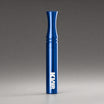
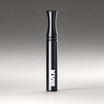
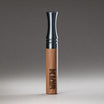
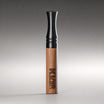
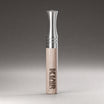

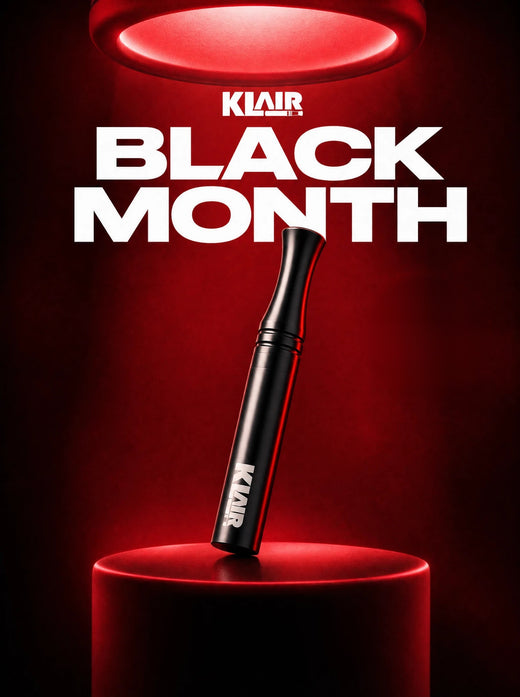
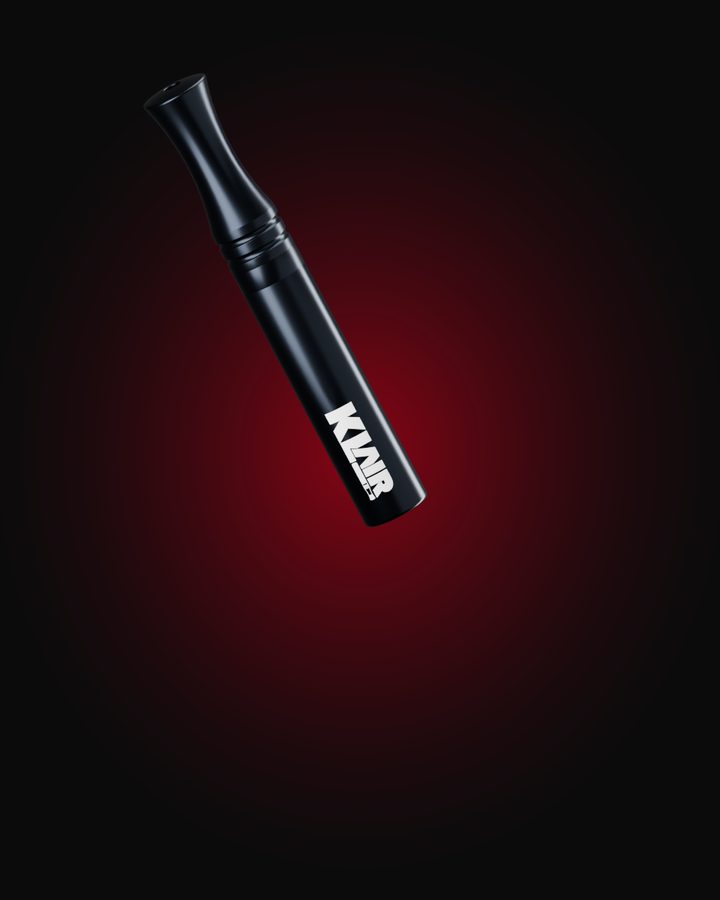
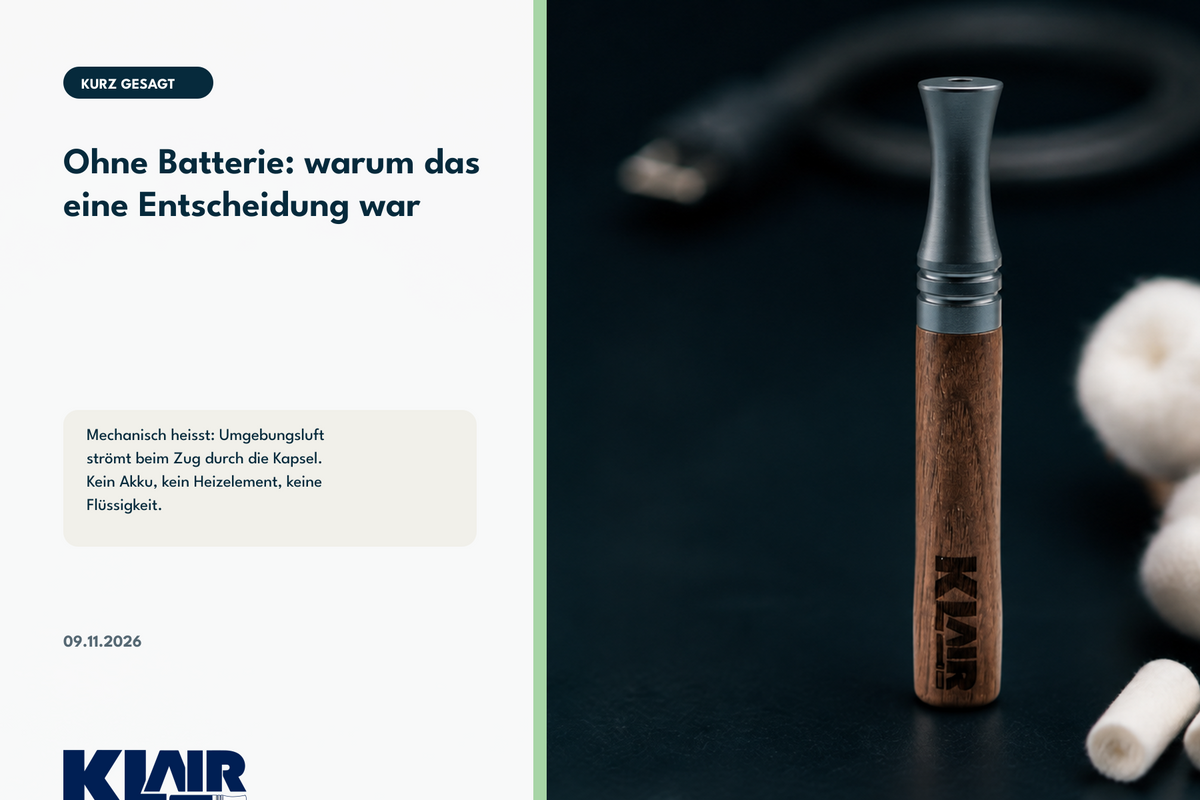
KLAIR has no battery, because a battery adds nothing to what the pen does. It moves air through a cotton capsule. That doesn't take electricity, which is why there's nothing to charge, nothing that wears out after two years, nothing that has to go in your carry-on when you fly, and nothing that ends up in battery recycling. That was a decision, and here's why.
In short
- Mechanical means: when you draw, ambient air flows through the capsule. No battery, no heating element, no liquid.
- In Switzerland, battery-powered devices belong at a collection point. In 2024, only 19 percent of them were returned (Swiss Recycle).
- On planes, devices with a lithium battery are only allowed in carry-on luggage (FOCA). A pen without a battery isn't subject to that rule.
- A battery ages; a piece of metal with a wooden grip doesn't in the same way.
- The price: no vapor, no warmth, no cloud. If you want that, we're not the right choice.
What mechanical means exactly
It means the only energy in the system is your own breath.
When you draw, negative pressure builds up in your mouth. Ambient air flows through the channel, through the cotton capsule with the aroma oil and into the front of your mouth. That's the whole process.
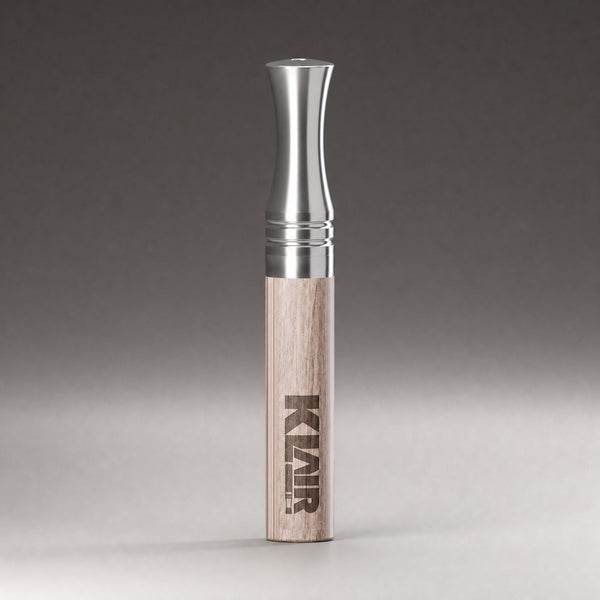
Nothing is heated. Nothing is vaporized. There's no sensor that detects the draw, no coil that glows and no liquid to refill. The moving parts are a magnet that holds the top and bottom together, a spring that holds the capsule, and a rotating airflow dial.
That's why there's no vapor. It surprises many people on the first draw, and it's not a flaw, it's how it's built.
Nothing to charge
The first everyday difference is the most mundane one: the pen is always ready.
A battery-powered device hangs on a cable, shows a charge level or is empty exactly when you need it. Disposable devices solve this by having you throw them away and buy a new one.
With KLAIR, there's no cable, no charge level and no moment when the device doesn't work because it needs power.
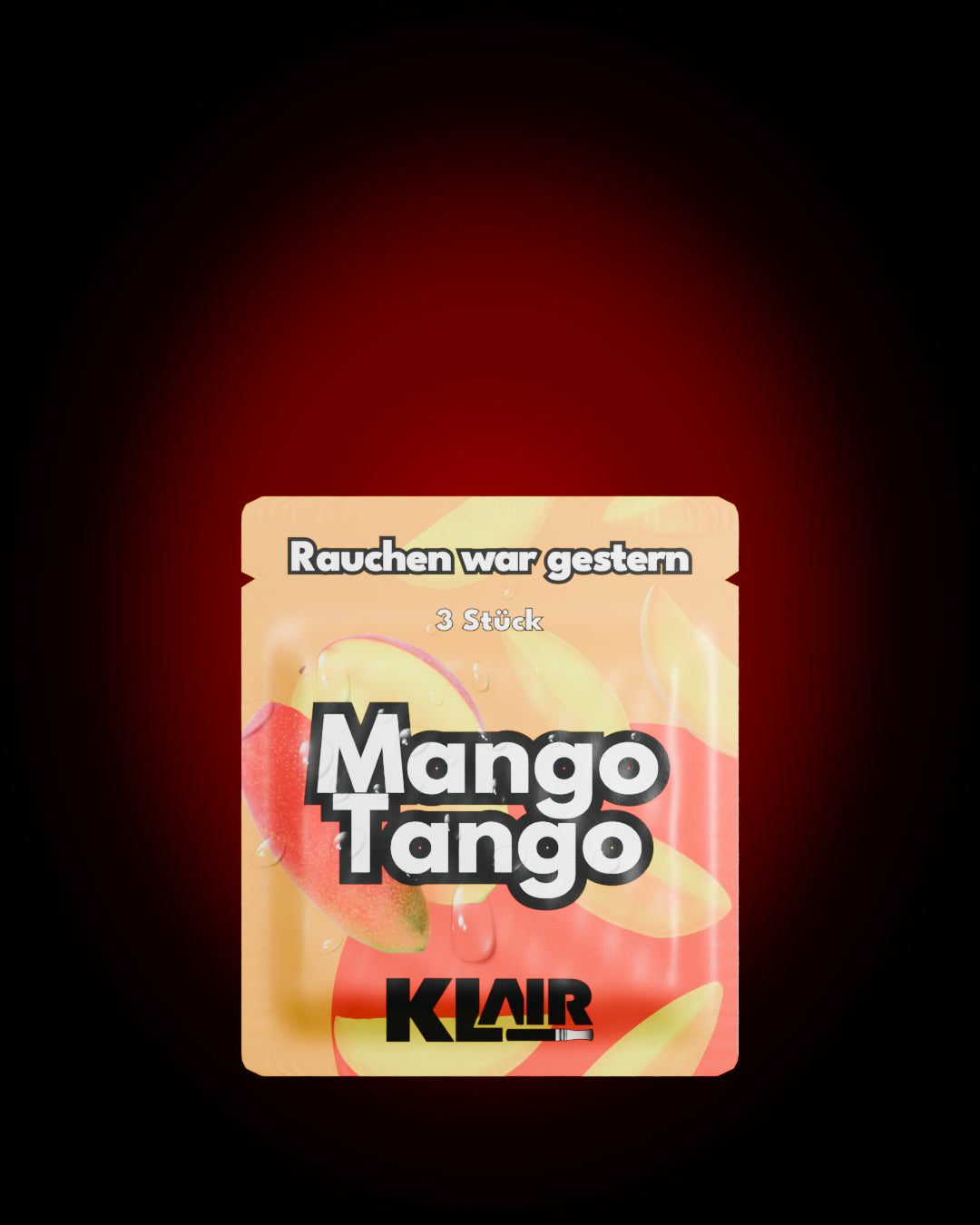
What you do have to keep an eye on is the capsule. According to our information, it lasts three to four days.
How changing the capsule works is covered in a separate article.
Nothing that wears out
A lithium battery loses capacity with every charging cycle. That's chemistry, not a defect.
With rechargeable vaporizers, the battery is usually the first part to give out, followed by the heating element. In many devices, both are built in permanently and can't be replaced.
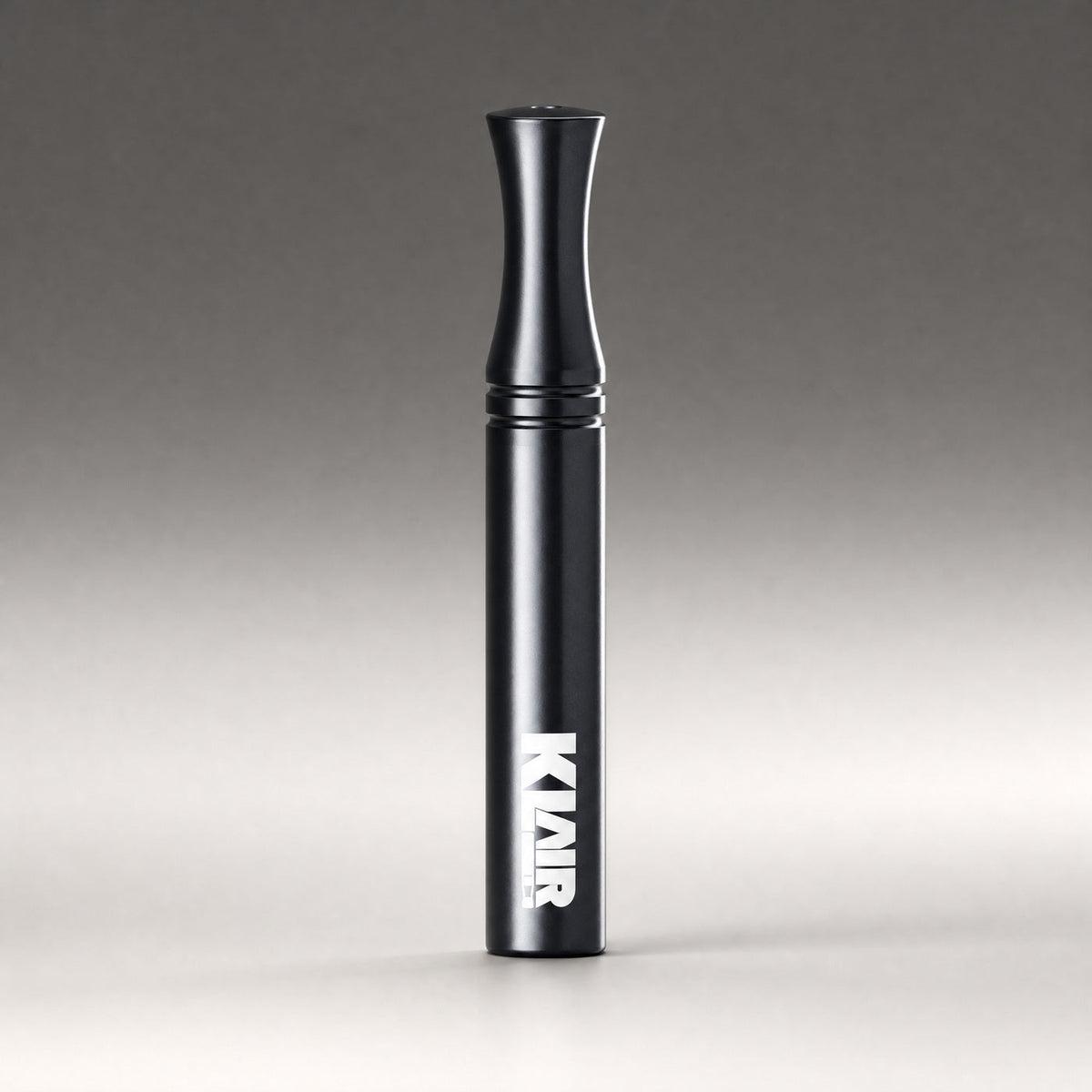
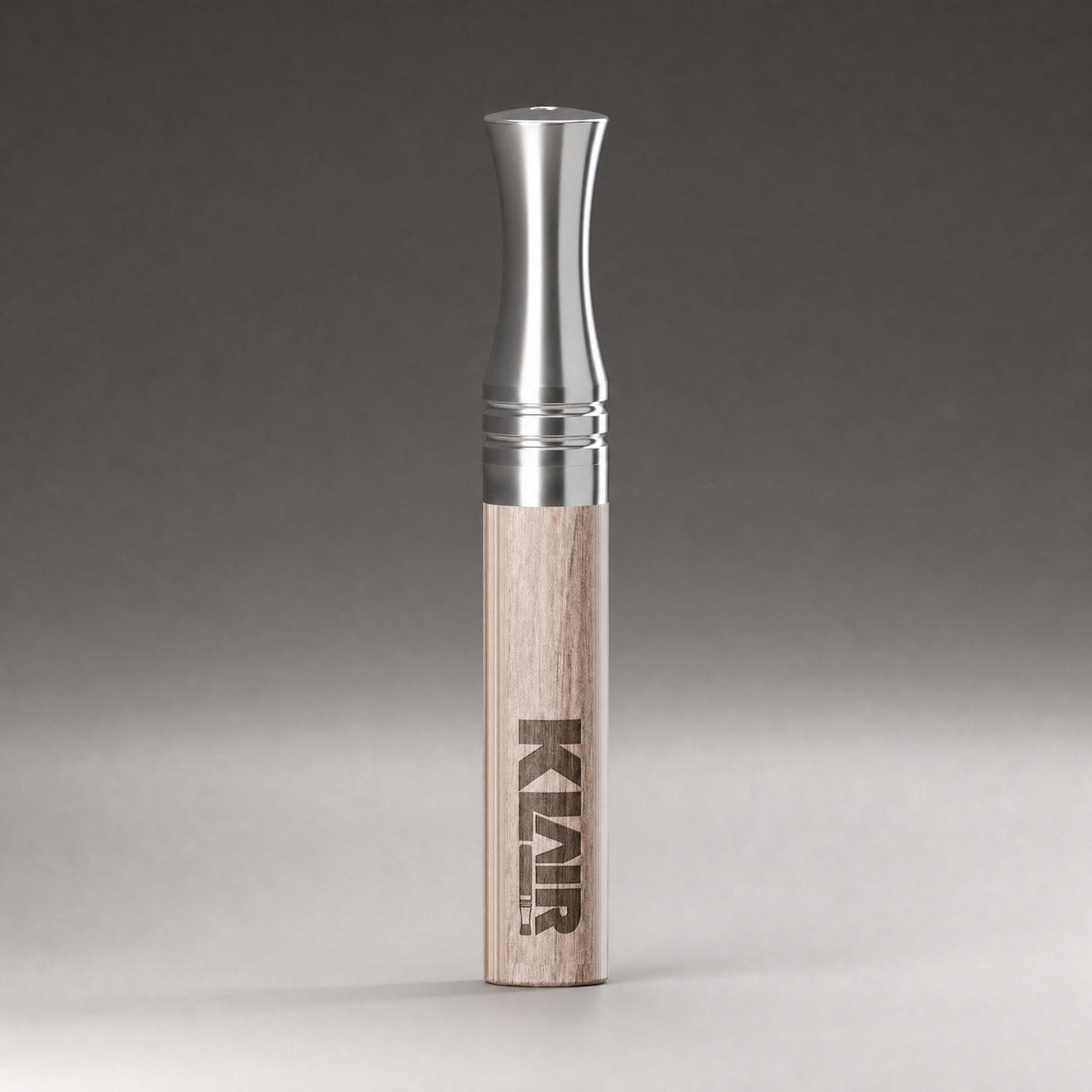
With KLAIR, the only parts under mechanical stress are the magnetic closure, the rotating dial, the spring in the capsule compartment and the mouthpiece. The body, made of metal or metal with a wooden grip, has no wear part that ages chemically.
We don't have a series of measurements on lifespan, so we don't claim a figure. What we can say: the part that breaks first in other devices doesn't exist in ours.
What care the pen needs is correspondingly short.
Nothing that causes trouble on a plane
On planes, devices with a lithium battery are allowed exclusively in carry-on luggage, must be switched off and may not be charged on board. That's what the Federal Office of Civil Aviation says (FOCA, as of 2026). This explicitly applies to e-cigarettes.
A pen without a battery isn't covered by that rule. It can go in your carry-on and in your checked bag, because under dangerous goods regulations it's an object made of metal, wood and cotton.
Whether you're allowed to use it on board is a different question. The airline decides that, not dangerous goods law. We recommend leaving it in your bag on the plane, because from a distance the crew can't tell an inhaler from a vaporizer.
Nothing that belongs in battery recycling
This is where the difference goes beyond the individual user.
In Switzerland, disposable devices with a lithium cell count as electrical devices and belong at a collection point or back at the store. Since the end of 2023, around 16 tons of them have been processed at the Batrec facility in Wimmis. In 2024, the return rate was 19 percent of devices sold; Swiss Recycle's target is 50 percent (Swiss Recycle, 2024).
In other words: four out of five disposable devices don't end up where they belong. In household waste or out in nature, a damaged lithium cell can heat up and catch fire. Swiss Recycle runs a campaign of its own on this, titled “Brandgefährlich.”
A used KLAIR capsule is cotton with aroma oil and goes in your household waste. The pen itself isn't thrown away, it keeps being used.
On June 4, 2025, the Swiss Parliament passed a ban on disposable e-cigarettes. The disposal issue is one of the reasons cited in the debate.
What the decision costs
Without power, some things just aren't possible, and we're writing that down before anyone is disappointed.
- No vapor. If you need the visible cloud as part of the ritual, you won't get it here.
- No warmth. The draw is at room temperature. For some people, that feels empty at first.
- Lower intensity. It's a flavor impression in the front of your mouth, not a draw with a substance behind it.
- No electronics behind the settings. You can adjust exactly one thing: the draw resistance, by twisting the top and bottom against each other, in fixed steps from fully open to fully closed. Everything else is your drawing technique.
If you want any of these four things, you're better served by another product. We'd rather say so beforehand than afterward.
Why we built it this way anyway
Because the pen replaces a movement, not a substance.
The hand-to-mouth gesture, the slow draw, the short break: that's what's left after the last cigarette and what your hand misses. That doesn't take electricity.
Everything a battery brings to the table, vapor, warmth, intensity, moves the product closer to exactly what most of our customers are trying to get away from.
So we left it out. Not as a sacrifice, but because it adds nothing to the job.
Why the gesture runs so deep is explained in the article on the two hundred repetitions a day.
The key points
KLAIR moves air through a cotton capsule. That doesn't take electricity, which is why there's no battery.
The everyday consequences: nothing to charge, no part that ages chemically, no carry-on rule, no battery recycling. In Switzerland, four out of five disposable devices with a lithium cell don't end up at a collection point (Swiss Recycle, 2024).
The price is clear: no vapor, no warmth, less intensity. If you need that, you're better off elsewhere.
Sources
- Swiss Recycle: 16 tons of e-cigarettes, new facility enables safe and efficient recycling in Switzerland. Return rate 19 percent, target 50 percent, Batrec facility in Wimmis since March 2024. swissrecycle.ch (accessed August 21, 2026)
- Swiss Recycle: Brandgefährlich, campaign on the correct disposal of batteries and electrical devices. swissrecycle.ch (accessed August 21, 2026)
- Swiss Recycle: Electrical and electronic devices, take-back obligation under the VREG. swissrecycle.ch (accessed August 21, 2026)
- Federal Office of Civil Aviation (FOCA): Electronic devices and spare batteries. E-cigarettes exclusively in carry-on luggage, switched off, no charging on board. bazl.admin.ch (accessed August 21, 2026)
- The Swiss Parliament: Ban on disposable e-cigarettes, final vote in the Council of States on June 4, 2025. parlament.ch (accessed August 21, 2026)
- KLAIR: Design, package contents and capsules, information from our own shop. klair.ch (accessed August 21, 2026)
- AT Schweiz: Swiss Tobacco Products Act (TabPG). at-schweiz.ch (accessed August 21, 2026)
- stopsmoking.ch: Free quit-smoking phone counseling, 0848 000 181. stopsmoking.ch (accessed August 21, 2026)


Leave a comment
All comments are moderated before being published.
This site is protected by hCaptcha and the hCaptcha Privacy Policy and Terms of Service apply.