










There are seven things you hear again and again when it comes to quitting smoking, and none of the seven holds up when you check. The most costly one is "one won't hurt." For men, one cigarette a day carries about 46 percent of the extra heart risk of twenty cigarettes, not five percent.
In short
- One cigarette a day isn't one twentieth of the risk. It's about half (Hackshaw et al. 2018).
- The average weight gain after quitting smoking is 3.14 kilograms.
- Coughing and trouble sleeping after you quit are withdrawal and recovery, not illness.
- In Switzerland, 19.1 percent made it on their first attempt. Several attempts are the norm.
- Cutting down gradually isn't better than a clean stop. If anything, it's the other way around.
"One won't hurt"
This sounds like math, but it isn't. It assumes that one cigarette a day carries one twentieth of the risk of twenty.
Hackshaw and colleagues ran the numbers in the BMJ in 2018. They analyzed 141 cohort studies from 55 publications.
For coronary heart disease, the relative risk at one cigarette a day was 1.48 for men and 1.57 for women. At twenty cigarettes, it was 2.04 and 2.84.
Converted, that means one cigarette a day carries 46 percent of the extra heart risk of twenty for men and 31 percent for women. For stroke, it's 41 and 34 percent.
So the curve isn't a straight line. It's steep at the start. If you cut down from twenty to one, you lower your risk much less than the number on the pack would suggest.
"Quitting makes you fat"
This one points in the right direction and gets the size wrong.
stopsmoking.ch gives an average gain of 3.14 kilograms for ex-smokers. Body mass index goes up by 0.82 points on average.
The site also notes that this gain has no direct link to a higher risk of chronic disease.
Three kilograms is something different from what many people fear. The number is an average, and the spread around it is wide.
Weight gain after quitting smoking looks at the causes.
"Once you quit, that's when you really get sick"
This describes something real and reads it the wrong way.
Coughing, poor sleep, irritability and constipation really do happen. stopsmoking.ch gives usually less than seven days for coughing and insomnia, two to four weeks for trouble concentrating and three to four weeks for constipation.
In 2003, Hajek and colleagues found a constipation peak after two weeks among 1,067 participants, with 17 percent affected on a net basis. In 2009, Jaehne and colleagues described poorer sleep quality for up to 20 days.
That's withdrawal and recovery, not a new illness. The Swiss Cancer League (Krebsliga Schweiz) puts the decline of smoker's cough at one to nine months, because the tiny hairs (cilia) in your airways first have to grow back.
If you read the cough as a step backward, you stop right when it starts working.
"If you don't make it the first time, you never will"
Here the data is clear, and it's on the side of the people who keep going.
AT Schweiz gives a 19.1 percent success rate on the first attempt for Switzerland. 80.1 percent of former daily smokers needed several attempts.
stopsmoking.ch puts it this way: "On average, it takes 4 attempts to quit successfully."
Chaiton and his team arrived at a higher number in BMJ Open in 2016. From 1,277 people and 3,362 attempts, their preferred estimate was 29.6 attempts, between 6.3 and 142 depending on the calculation method.
The difference comes from forgotten attempts. Both numbers say the same thing: a failed attempt is the norm, not a verdict.
Why several attempts are normal goes into the numbers in detail.
"Tapering off slowly is the gentler way"
This is the myth that sounds the most believable.
The Cochrane review CD008033 compared cutting down with quitting abruptly. The risk ratio was 0.94, with a confidence interval of 0.79 to 1.13. No meaningful difference.
Lindson-Hawley and colleagues came to a clearer result in the Annals of Internal Medicine in 2016. Of 697 participants, 49.0 percent of those who quit abruptly were smoke-free after four weeks, compared with 39.2 percent of those who cut down gradually.
The two findings stand side by side, and we won't settle them here. The only sure thing: tapering off isn't gentler in the sense of being more successful.
Quitting abruptly or tapering off compares the two approaches.
"Smoking relaxes you"
This describes a real feeling and explains it backward.
In 1999, Andy Parrott reached an uncomfortable conclusion in the American Psychologist. The relaxing effect of smoking is mostly the end of the tension that builds up between two cigarettes.
Over the course of a day, the dependence raises stress levels instead of lowering them. On average, smokers are more stressed than nonsmokers.
What stays real is the break. Not the smoke.
Keep the smoke break, drop the cigarette describes how to separate the two.
"Vaping on top cuts the harm in half"
This claim is new and spreading fast. It affects everyone who uses cigarettes and vapes side by side.
In 2025, Xue and colleagues analyzed data from the American PATH study, wave 5 with 2,679 adults. Among them were 1,913 people who only smoked, 316 who only vaped and 450 dual users.
The result: dual users had a similar toxicant exposure to people who only smoked the same number of cigarettes. The extra vaping didn't lower the exposure.
So the math doesn't add up. What counts is how many cigarettes are left.
The eighth claim, which we don't make ourselves
One claim is missing from this list, and it comes from our own industry.
"This product will help you quit." We don't say it, not about KLAIR and not about anything else.
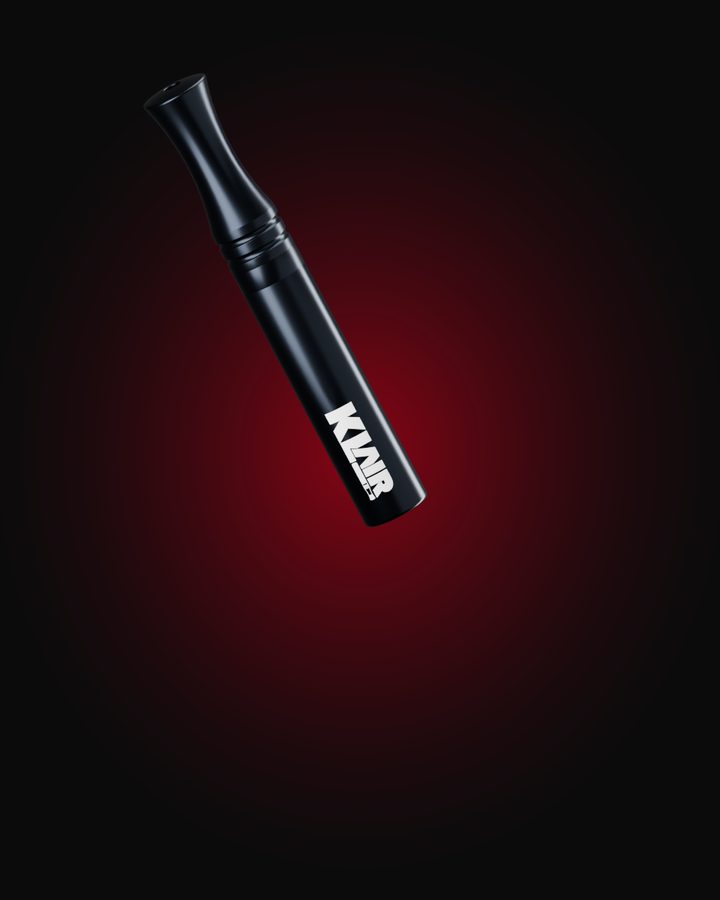
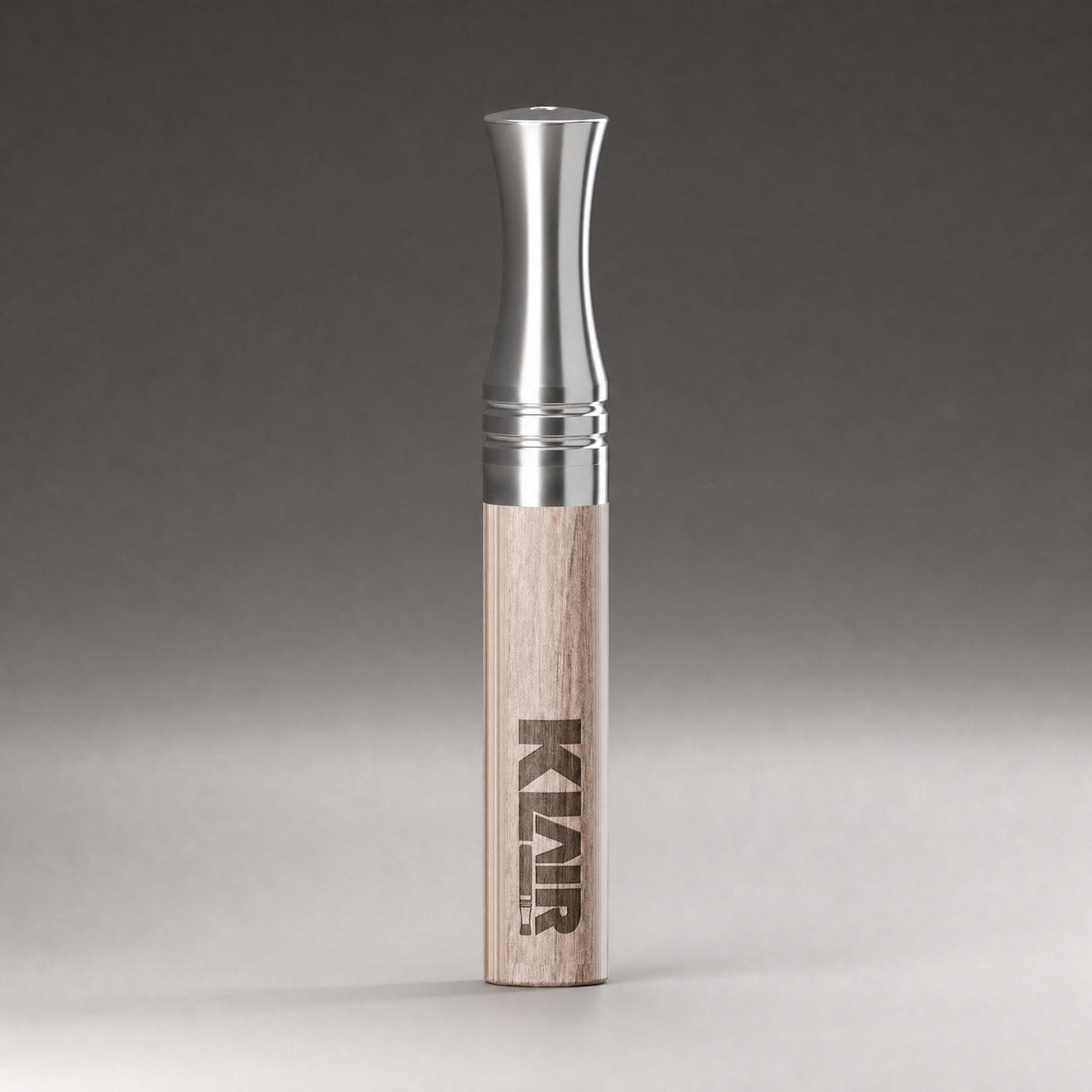
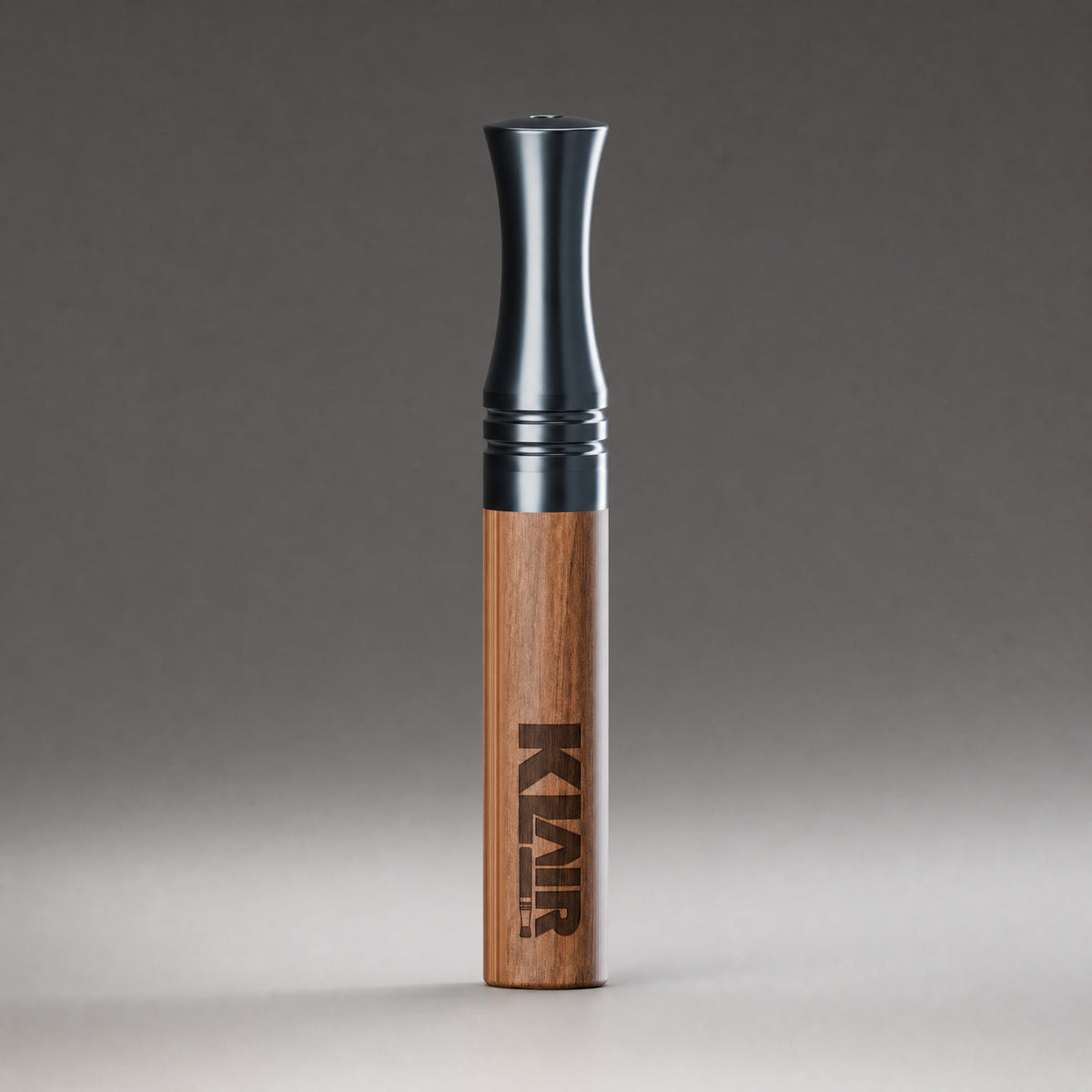
KLAIR is an aroma inhaler with no tobacco, no nicotine and no electronics. It keeps your hand and mouth busy. Whether that does anything for you, we don't know, and there's no solid body of research on this type of device.
Why we don't make health promises explains why that isn't modesty but the law.
What we don't know about this
Three limitations belong here.
Averages say nothing about you. The 3.14 kilograms, the 19.1 percent and the 46 percent are group values. None of these numbers tells you where you personally will land.
Two sources contradict each other on tapering off. Cochrane finds no difference, Lindson-Hawley finds one in favor of a clean stop. We leave this open instead of picking a side.
The studies on dual use come from the US. The products and usage patterns there aren't identical to those in Switzerland.
The key points in brief
For men, one cigarette a day carries about 46 percent of the extra heart risk of twenty, not one twentieth. The average weight gain after quitting smoking is 3.14 kilograms, and according to stopsmoking.ch it has no direct link to chronic disease.
Coughing and trouble sleeping after you quit are withdrawal and recovery. Several attempts are the norm, and 19.1 percent make it on the first. Tapering off isn't more successful than a clean stop, and vaping on top doesn't lower toxicant exposure.
For you, that means: check each of these claims before you base a decision on it. Most of them come from a time before the numbers.
The honest guide to quitting smoking in Switzerland puts the pieces together.
Sources
- Hackshaw, A., Morris, J. K., Boniface, S., Tang, J.-L., Milenković, D. (2018): Low cigarette consumption and risk of coronary heart disease and stroke, meta-analysis of 141 cohort studies in 55 study reports. BMJ 360:j5855. Relative risk of coronary heart disease at one cigarette a day 1.48 (men) and 1.57 (women), at twenty 2.04 and 2.84. Share of excess risk: 46 and 31 percent for coronary heart disease, 41 and 34 percent for stroke. pmc.ncbi.nlm.nih.gov (accessed August 21, 2026)
- stopsmoking.ch: Controlling your weight. Average gain 3.14 kg, BMI plus 0.82, with no direct link to a higher risk of chronic disease. stopsmoking.ch (accessed August 21, 2026)
- stopsmoking.ch: Nicotine withdrawal symptoms. Duration for each symptom, coughing and insomnia usually under seven days, concentration two to four weeks, constipation three to four weeks. stopsmoking.ch (accessed August 21, 2026)
- Hajek, P., Gillison, F., McRobbie, H. (2003): Stopping smoking can cause constipation. Addiction 98(11), 1563 to 1567. 1,067 participants, peak after two weeks, 17 percent affected on a net basis. onlinelibrary.wiley.com (accessed August 21, 2026)
- Jaehne, A., Loessl, B., Bárkai, Z., Riemann, D., Hornyak, M. (2009): Effects of nicotine on sleep during consumption, withdrawal and replacement therapy. Sleep Medicine Reviews 13(5), 363 to 377. Poorer sleep quality during withdrawal for up to 20 days. pubmed.ncbi.nlm.nih.gov (accessed August 21, 2026)
- Swiss Cancer League (Krebsliga Schweiz): The risks of smoking, why quitting is worth it. Decline of smoker's cough after one to nine months. krebsliga.ch (accessed August 21, 2026)
- AT Schweiz: Smoking cessation, data and figures. 19.1 percent success on the first attempt, 80.1 percent with several attempts. at-schweiz.ch (accessed August 21, 2026)
- stopsmoking.ch: Getting started with quitting. "On average, it takes 4 attempts to quit successfully." stopsmoking.ch (accessed August 21, 2026)
- Chaiton, M., Diemert, L., Cohen, J. E., Bondy, S. J., Selby, P., Philipneri, A., Schwartz, R. (2016): Estimating the number of quit attempts it takes to quit smoking successfully in a longitudinal cohort of smokers. BMJ Open 6(6), e011045. 1,277 participants, 3,362 attempts, preferred estimate 29.6 attempts. pmc.ncbi.nlm.nih.gov (accessed August 21, 2026)
- Lindson, N. et al.: Reduction versus abrupt cessation in smokers who want to quit. Cochrane Database of Systematic Reviews, CD008033. Risk ratio 0.94, confidence interval 0.79 to 1.13. cochranelibrary.com (accessed August 21, 2026)
- Lindson-Hawley, N., Banting, M., West, R. et al. (2016): Gradual versus abrupt smoking cessation, a randomized controlled noninferiority trial. Annals of Internal Medicine 164(9). 697 participants, after four weeks 49.0 versus 39.2 percent. acpjournals.org (accessed August 21, 2026)
- Parrott, A. C. (1999): Does cigarette smoking cause stress? American Psychologist 54(10), 817 to 820. See also Parrott, A. C. (2012): Explaining the stress-inducing effects of nicotine to cigarette smokers. Human Psychopharmacology, Clinical and Experimental. onlinelibrary.wiley.com (accessed August 21, 2026)
- Xue, Z., Orr-Souza, T., Nargis, N., Patel, A., Nighbor, T. (2025): Nicotine and Toxicant Exposure among Individuals using both Combustible Cigarettes and E-cigarettes Based on Level of Product Use. Nicotine and Tobacco Research 27(9), 1591. PATH study wave 5, 2,679 adults. academic.oup.com (accessed August 21, 2026)



Leave a comment
All comments are moderated before being published.
This site is protected by hCaptcha and the hCaptcha Privacy Policy and Terms of Service apply.